

































Can Braces Fix Protrusion? Effective Treatments for Overjet
Protruding front teeth, medically known as overjet, can significantly impact your confidence and oral health. If you’re wondering whether braces can fix dental protrusion, the answer is often yes – but the approach depends on whether the issue is dental or skeletal in nature. Understanding the difference and available treatment options can help you make an informed decision about your orthodontic care.

Dental Protrusion vs. Skeletal Jaw Issues
The first crucial step in treating protruding teeth is determining the root cause. This distinction fundamentally shapes your treatment plan and expected outcomes.
Dental Protrusion
Dental protrusion occurs when the teeth themselves are positioned too far forward, while the underlying jaw structure remains normal. This type of protrusion typically responds excellently to orthodontic treatment alone. The teeth can be gradually moved back into proper alignment using various orthodontic techniques, creating a more balanced and attractive smile.
Skeletal Protrusion
Skeletal protrusion involves the actual positioning of the upper jaw (maxilla) relative to the lower jaw (mandible). In severe cases where the jaw bones themselves are significantly misaligned, orthodontics alone may not achieve optimal results. These complex cases often require a combined approach involving both orthodontic treatment and orthognathic (jaw) surgery to achieve balanced facial profiles and stable, functional bites.
Why Treat Protruding Teeth?
Protruding front teeth aren’t just a cosmetic concern. They can lead to several functional and health issues:
- Increased trauma risk: Protruding teeth are more vulnerable to injury during sports, accidents, or everyday activities
- Oral hygiene challenges: Proper cleaning becomes more difficult, potentially leading to decay and gum disease
- Speech difficulties: Severe protrusion can affect pronunciation and clarity
- Bite problems: Improper tooth alignment can cause uneven wear and jaw joint issues
- Confidence impact: Many patients report improved self-esteem after treatment
Treatment Options for Dental Protrusion
Modern orthodontics offers several effective approaches to correct protruding teeth, each with specific advantages depending on your individual case.
Fixed Braces (Metal and Damon Systems)
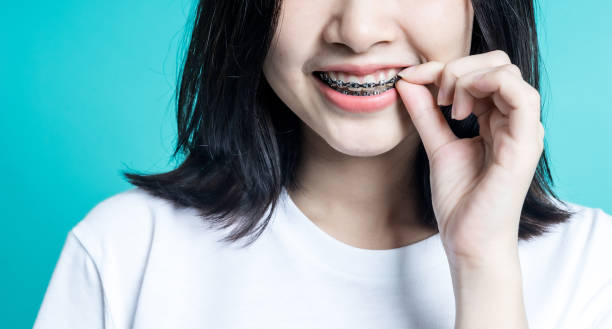
Traditional metal braces and self-ligating systems like Damon braces remain highly effective for treating dental protrusion. These systems offer several key advantages:
Controlled Torque: Fixed braces provide precise control over tooth movement, allowing orthodontists to apply specific forces to retract protruding teeth while maintaining proper root positioning.
Space Management: Creating or utilizing existing space is crucial for retracting protruding teeth. Fixed braces excel at space creation through techniques like:
- Interproximal reduction (careful reshaping of tooth surfaces)
- Expansion of the dental arch when appropriate
- Strategic extraction in select cases
Elastic Integration: When indicated, elastic bands can provide additional force vectors to help retract protruding teeth effectively. The continuous force application possible with fixed braces makes them particularly suitable for complex movements.
Learn more about our comprehensive braces service
Invisalign Clear Aligners
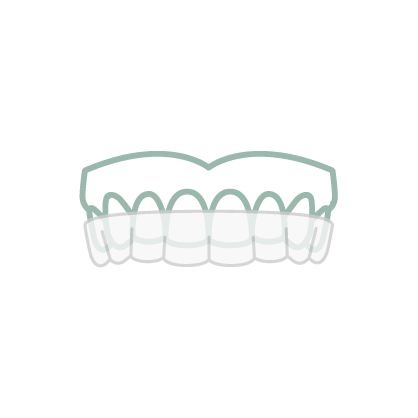
For suitable cases of dental protrusion, Invisalign offers a discreet alternative to traditional braces. This treatment approach uses a series of custom-made, virtually invisible aligners to gradually move teeth into proper position.
Staged Mechanics: Invisalign treatment for protrusion involves carefully planned stages, with each aligner making small, controlled movements. This systematic approach ensures predictable results while maintaining patient comfort.
Patient Compliance: Success with Invisalign depends heavily on patient compliance. Aligners must be worn 20-22 hours daily to achieve optimal results. For motivated patients who can maintain this schedule, Invisalign can effectively treat many cases of dental protrusion.
Aesthetic Advantage: The nearly invisible nature of clear aligners makes them particularly appealing to adults and image-conscious teenagers who want to improve their smile discreetly.
Explore our Invisalign clear aligner options
Treatment Planning Considerations
Successful treatment of protruding teeth requires careful evaluation of several factors:
Gum Health Assessment
Healthy gums provide the foundation for successful orthodontic movement. Any existing periodontal issues must be addressed before beginning treatment to ensure optimal outcomes and prevent complications.
Bone Support Evaluation
Adequate bone support around the tooth roots is essential for safe tooth movement. Advanced imaging techniques help orthodontists assess bone levels and plan appropriate movement strategies.
Facial Balance Analysis
Treatment planning must consider how tooth movement will affect overall facial aesthetics. The goal is to achieve not just straight teeth, but a harmonious facial profile that enhances your natural features.
Treatment Timelines and Expectations
Understanding realistic timelines helps set appropriate expectations for your orthodontic journey.
Typical Treatment Duration
Most dental protrusion cases can be successfully treated within 12-24 months, assuming good patient cooperation and regular appointments. Factors affecting treatment time include:
- Severity of the protrusion
- Patient age and bone density
- Compliance with treatment instructions
- Individual healing response
Progress Monitoring
Regular check-ups allow your orthodontist to monitor progress and make necessary adjustments. These appointments are crucial for staying on track and achieving optimal results within the projected timeframe.
The Critical Importance of Retention
Perhaps the most crucial phase of protrusion treatment is retention – the period after active treatment when your new tooth positions are stabilized.
Why Retention Matters
Teeth have a natural tendency to return to their original positions, a phenomenon known as relapse. This tendency is particularly strong in cases where teeth have been significantly moved, such as in protrusion correction.
Retention Options
Fixed Retainers: Thin wires bonded to the back of teeth provide continuous retention and are particularly effective for maintaining incisor positions.
Removable Retainers: Custom-made appliances worn during sleep or as directed help maintain tooth positions while allowing for normal oral hygiene.
Long-term Success
Following retention protocols is essential for protecting your investment in orthodontic treatment. Many patients find that the improved confidence and oral health benefits make retention a small price to pay for their transformed smile.
Making the Right Choice for Your Smile
Whether you choose traditional braces or clear aligners, the key to successful protrusion correction lies in accurate diagnosis, appropriate treatment planning, and commitment to the complete treatment process including retention.
During your consultation, your orthodontist will evaluate your specific case, discuss all available options, and develop a customized treatment plan that addresses your unique needs and goals. With proper care and compliance, most patients with dental protrusion can achieve dramatic improvements in both function and aesthetics.
Don’t let protruding teeth hold you back from the confident smile you deserve. Schedule a consultation today to explore how modern orthodontic treatment can transform your smile and improve your oral health for years to come.