






































Anterior Dental Implant Procedures in Bangkok
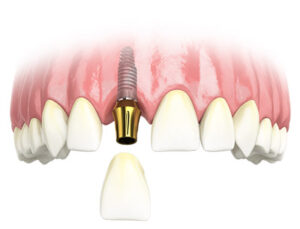
Dental Implant in the aesthetic zone needs extensive experience and meticulous work from a dental implantologist. Dental implant aesthetic consists of both pink (gum) and white (crown) parts in order to achieve highest aesthetic result. Moreover, if problem occurs, it will be very difficult to restore the pleasant aesthetic result. Therefore, anterior dental implant is considered one of the most challenging aspect in dentistry.
Types of Anterior Dental Implant Procedures
- Non-extracted tooth: the procedure in this category is already written in another section.
- Extracted tooth: in this case, bone grafting will be done much or less depending on how long has the tooth been extracted. Bone resorption after extraction is excessive in the anterior teeth compared to other area.
Procedure for Anterior Dental Implants (Extracted Area)
- Oral examination and x-ray to determine how many implants are needed?, how much bone grafting is needed?, and if simultaneous dental implant placement and bone grafting can be done (more than 90% from our experience). Then, our dental implantologist will make impression for removable denture for the patient to wear during healing period.
- Our dental implantologist will place dental implant simultaneously with bone grafting. With this technique, we reduce treatment time to about half (total 4-5 months). Bone grafting alone will need 5-6 months before dental implant can be placed which will require another 4-6 months of healing time (total 1 year). Patients also is satisfied with this technique because of shorter treatment time, shorter period without permanent tooth, and less surgery.
- After 4-6 months healing time, for the best aesthetic result, our dental implantologist will start making provisional crown to mould gum tissue mimicking natural tooth. It will take another 1-2 months for soft tissue to mature before definitive crown can be done.
- Fabrication of definitive crown on anterior dental implant.
For more information on Bangkok anterior dental implants, contact Global Dental Complex today.
Anterior Dental Implants: A Natural-Looking Solution for Missing Front Teeth
Losing a front tooth can affect much more than your ability to chew. Front teeth play an important role in your smile, speech, facial appearance, and overall confidence. When a front tooth is missing due to injury, decay, gum disease, or extraction, many patients look for a long-term replacement that feels stable and looks as natural as possible. One of the most effective options is Anterior Dental Implants.
Anterior Dental Implants are dental implants placed in the front area of the mouth, usually to replace missing incisors or canines. This area is often called the aesthetic zone because it is highly visible when you smile or speak. For this reason, implant treatment in the front teeth requires careful planning, precise placement, and close attention to the appearance of the gums and final crown.
What Are Anterior Dental Implants?
Anterior Dental Implants are titanium or ceramic implant posts that are placed into the jawbone to replace the root of a missing front tooth. Once the implant has integrated with the bone, a custom-made dental crown is attached to complete the restoration. The final result is designed to look, feel, and function like a natural tooth.
Unlike removable dentures, dental implants are fixed in place. Unlike traditional dental bridges, implants usually do not require grinding down the neighboring healthy teeth. This makes them a popular option for patients who want to replace a missing front tooth while preserving the surrounding natural teeth as much as possible.
Why Front Tooth Implants Require Special Planning
Replacing a front tooth is different from replacing a back tooth. While strength and function are still important, the appearance of the final result is especially critical. The shape of the gumline, the color of the crown, the position of the implant, and the balance with the surrounding teeth all affect how natural the smile will look.
If an implant is placed too far forward, too far back, or at an incorrect angle, the final crown may look too long, bulky, or unnatural. There may also be dark spaces between the teeth or uneven gum levels. Because of this, Anterior Dental Implants often require detailed assessment before treatment begins.
Your dentist may evaluate several factors, including bone volume, gum thickness, smile line, tooth shape, bite position, and the condition of the neighboring teeth. In some cases, additional procedures such as bone grafting or gum tissue grafting may be recommended to create a better foundation for the implant.
Who Is a Good Candidate for Anterior Dental Implants?
Anterior Dental Implants may be suitable for patients who have lost one or more front teeth and want a fixed, natural-looking replacement. They may be considered for people who have lost a tooth because of trauma, severe decay, root fracture, failed root canal treatment, or advanced gum disease.
You may be a good candidate if you have healthy gums, enough jawbone to support the implant, good oral hygiene habits, and overall health that supports normal healing. Patients who smoke, have uncontrolled diabetes, or have active gum disease may need additional evaluation before implant treatment.
Even if you have been missing a front tooth for a long time, implant treatment may still be possible. However, the bone and gum tissue in the area may have changed over time. A full dental examination is needed to determine whether grafting or other preparatory treatment is required.
Benefits of Anterior Dental Implants
1. Natural-Looking Smile Restoration
One of the main goals of Anterior Dental Implants is to restore the smile in a way that blends naturally with the surrounding teeth. The final crown can be customized in color, size, shape, and translucency to match your natural teeth as closely as possible.
2. Stable and Comfortable Function
Because dental implants are anchored in the jawbone, they provide strong support for the replacement tooth. This can make speaking, smiling, and biting feel more secure compared with removable options.
3. No Need to Grind Adjacent Teeth
A traditional bridge often requires reshaping the teeth next to the missing tooth. With a single dental implant, the missing tooth can often be replaced without altering healthy neighboring teeth. This is one reason many patients choose implants when the adjacent teeth are still in good condition.
4. Helps Preserve Jawbone Structure
When a tooth is lost, the bone in that area may gradually shrink because it no longer receives stimulation from the natural tooth root. A dental implant helps provide stimulation to the bone and may reduce bone loss in the missing tooth area.
5. Long-Term Tooth Replacement Option
With proper care, dental implants can be a long-lasting solution. The implant itself is designed to integrate with the bone, while the crown may need maintenance or replacement over time depending on wear, bite force, and oral hygiene.
The Treatment Process for Anterior Dental Implants
1. Consultation and Examination
The first step is a detailed consultation. Your dentist will examine your teeth, gums, bite, and missing tooth area. Digital X-rays, photographs, or 3D scans may be used to assess bone volume and plan the ideal implant position.
2. Treatment Planning
For front tooth implants, planning is especially important. The dentist must consider not only where the implant should be placed, but also how the final crown will emerge from the gumline. This helps create a more natural appearance.
3. Bone or Gum Grafting, If Needed
Some patients may not have enough bone or gum tissue in the front tooth area. This can happen after tooth loss, infection, trauma, or long-term denture use. Bone grafting or soft tissue grafting may be recommended to improve the foundation before or during implant placement.
4. Implant Placement
During implant placement, the implant post is carefully positioned in the jawbone. Local anesthesia is commonly used to keep the procedure comfortable. After placement, the implant usually needs time to heal and integrate with the bone.
5. Temporary Tooth, When Appropriate
Because front teeth are visible, many patients are concerned about appearance during the healing period. Depending on the case, a temporary tooth may be provided. This temporary restoration is designed for appearance and light function while the implant heals.
6. Final Crown Placement
Once the implant is stable and the gum tissue has healed properly, the final crown is made. The crown is carefully designed to match the surrounding teeth in color, shape, and proportion. This step is essential for achieving a natural-looking result.
Immediate Implant Placement for Front Teeth
In selected cases, an implant may be placed immediately after a damaged front tooth is removed. This is known as immediate implant placement. It can help preserve the shape of the gum and reduce the number of surgical visits. However, not every patient is suitable for this approach.
Immediate placement depends on factors such as infection level, bone condition, gum thickness, bite pressure, and the stability of the implant at the time of placement. Your dentist will determine whether immediate implant placement is appropriate for your specific case.
Are Anterior Dental Implants Painful?
Many patients worry about pain during implant treatment. In most cases, the procedure is performed under local anesthesia, so discomfort during the treatment is minimized. After the procedure, mild swelling, soreness, or tenderness may occur for a few days.
The level of discomfort depends on the complexity of the case. If bone grafting, gum grafting, or multiple implants are involved, recovery may take longer. Your dentist will provide aftercare instructions and medication if needed to support healing.
How to Care for Anterior Dental Implants
Anterior Dental Implants require daily care just like natural teeth. Although the implant crown cannot decay like a natural tooth, the gum and bone around the implant can still become inflamed if plaque builds up.
- Brush your teeth at least twice a day.
- Clean around the implant carefully with floss, interdental brushes, or tools recommended by your dentist.
- Avoid biting very hard objects with the front implant crown.
- Visit your dentist regularly for professional cleaning and implant checkups.
- Inform your dentist if you grind your teeth at night.
- Avoid smoking, as it may increase the risk of implant complications.
Anterior Dental Implants vs. Dental Bridges
Both implants and bridges can replace missing front teeth, but they work differently. A bridge is supported by the neighboring teeth, which usually need to be reshaped. A dental implant is supported by the jawbone and does not usually depend on adjacent teeth for support.
For patients with healthy neighboring teeth, Anterior Dental Implants may be a more conservative option because they help preserve natural tooth structure. However, bridges may still be appropriate in some cases, especially when the adjacent teeth already need crowns or when implant treatment is not suitable.
Anterior Dental Implants vs. Removable Dentures
Removable dentures can replace missing teeth and may be more affordable at first. However, some patients find them less stable, especially in the front of the mouth where movement can affect speech and confidence. Dentures also do not replace the tooth root, so they do not provide the same type of bone stimulation as implants.
Anterior Dental Implants are fixed in place and often feel more secure. They are designed to look and function more like natural teeth, making them a preferred option for many patients who want a long-term solution.
Possible Risks and Limitations
Like any dental procedure, implant treatment has risks and limitations. Possible complications include infection, implant failure, gum recession, bone loss, crown loosening, or aesthetic concerns. These risks can often be reduced with proper planning, good oral hygiene, and regular follow-up visits.
Patients should also understand that implant treatment takes time. In some cases, the process may take several months, especially if grafting is needed. A successful outcome depends on careful diagnosis, proper implant placement, healthy healing, and long-term maintenance.
What to Ask Before Getting Anterior Dental Implants
Before starting treatment, it is helpful to ask your dentist clear questions so you understand the full plan. Useful questions include:
- Am I a suitable candidate for a front tooth implant?
- Do I need bone grafting or gum grafting?
- Will I have a temporary tooth during the healing period?
- How long will the full treatment take?
- What material will be used for the final crown?
- How should I care for the implant after treatment?
- What are the possible risks in my case?
Conclusion: Anterior Dental Implants Can Restore Both Function and Confidence
Anterior Dental Implants are a highly effective option for replacing missing front teeth. They can restore the appearance of your smile, improve confidence, support normal speech, and provide stable function. Because the front teeth are highly visible, this treatment requires careful planning and attention to detail.
If you are missing a front tooth or need to remove a damaged tooth, consulting an experienced dentist is the best first step. With the right treatment plan, Anterior Dental Implants can provide a natural-looking and long-lasting solution for your smile.
Frequently Asked Questions About Anterior Dental Implants
Are anterior dental implants suitable for everyone?
Not everyone is immediately suitable for Anterior Dental Implants. Your dentist needs to evaluate your bone, gums, bite, oral hygiene, and general health before recommending treatment.
Will a front tooth implant look natural?
When properly planned and restored, a front tooth implant can look very natural. The final result depends on implant position, gum shape, crown design, and the condition of the surrounding teeth.
Can I get an implant immediately after tooth extraction?
Immediate implant placement may be possible in selected cases, but it depends on bone condition, infection, gum health, and implant stability. Your dentist will assess whether this approach is suitable for you.
How long do anterior dental implants last?
Dental implants can last many years with proper care, regular dental visits, and good oral hygiene. The crown may need maintenance or replacement over time due to normal wear.
Do anterior dental implants require special care?
They require consistent cleaning and regular dental checkups. You should clean around the implant carefully and avoid using the front implant crown to bite very hard objects.