
































Ready to care for your smile with confidence.
For more information or to schedule a consultation with a dentist at Global Dental Complex, please contact us.
📞 Call / WhatsApp: (+66) 065-669-9191
💬 LINE: @globaldentalcpx
🌐 Website: globaldentalcomplex.com/th
Book your consultation today and start planning the treatment that is right for you.
Root Coverage Surgery & Receding Gum Treatment in Bangkok
What is Gum Recession?
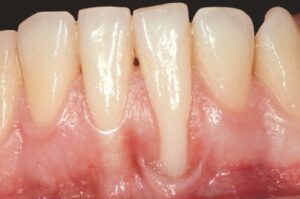
Gum recession is when the the gum margin recedes away, exposing more of the tooth, or the tooth’s root. When gum recession left untreated, the surrounding tissue and bone structures of the teeth can be damaged, sometimes resulting in tooth loss. Since, receding gum occurs gradually, patients will be unaware of the problem.
Symptoms of Receding Gums
As receding gum progress over time, you may notice the following symptoms:
- Long Teeth
Your teeth will look longer. If you have picture of your teeth 10 or 20 years before, you may be able to compare that your teeth are longer. Or you can have your teeth scan with our intra-oral scanner and keep the file to compare your teeth in the future.
When your tooth roots get exposed, it can cause extremely sensitive and uncomfortable feelings.
- Loose teeth
When you have receding gum, you may notice loose teeth, causing from the bacteria and periodontal disease in the gum around the teeth.
Common Causes of Gum Recession
There are many factors, including:
It causes by bacteria that destroy gum tissue and the bone that holds your teeth in place. Periodontal disease is the main cause of gum recession.
- Brushing too hard
If you brush your teeth too aggressively or incorrectly, it can cause your tooth’s enamel to wear away and your gums to recede. Brushing with just the right amount of pressure with soft toothbrush is the best way to avoid gum recession and exposed roots.
- Tooth paste
Some toothpastes consist of large brushing grain which will cause severely worn tooth and receding gum.
Receding Gum Treatment and Recovery Options
If the recession cause from periodontal disease (loose teeth), you will need periodontal treatment as written on the other section before correcting the recession with surgery.
If the recession cause from brushing or toothpaste, there are 2 options: gum grafting surgery or tooth-colour filling. The difference is, with gum grafting, your teeth will look shorter but, with filling, your teeth will still look long but teeth sensitivity will be resolved.
Professional Root Coverage (Periodontal) Surgery
Our periodontist will harvest gum tissue called “connective tissue graft” from the roof of your mouth and place over the receding area. Then, periodontist will pull the gum at donor site to cover the connective tissue graft and receding area at the same time. The success of this gum recession treatment through periodontal surgery depends on many factors especially the defect shape and oral hygiene of the patients.Periodontist Specialists.
How to Prevent Receding Gums
Taking good care of your oral hygiene is the best way to prevent gum recession. Gentle brushing with soft toothbrush and flossing daily. Dental check-up with your dentist at least twice a year.
If you are seeking gum recession treatment in Bangkok, or require a consultation on periodontal surgery, contact Global Dental Complex today.
Root Coverage (Periodontal) Surgery for Receding Gums and Exposed Tooth Roots
Gum recession can make the teeth look longer, expose sensitive root surfaces, and increase the risk of root decay or further gum problems. For many patients, the concern is both functional and aesthetic. When the gum tissue has pulled away from the tooth and the root is exposed, Root Coverage (Periodontal) Surgery may be recommended to restore gum coverage and protect the tooth.
Root Coverage (Periodontal) Surgery is a specialized periodontal procedure designed to treat gum recession. The goal is to cover exposed tooth roots, improve gum thickness, reduce sensitivity, and create a healthier, more stable gumline. This treatment is often performed using gum grafting techniques or soft tissue repositioning, depending on the severity of recession and the condition of the surrounding tissue.
Not every case of gum recession requires surgery. Some mild cases can be monitored or managed with improved brushing technique and periodontal care. However, when recession is progressive, causes sensitivity, affects the smile, or leaves the root vulnerable, surgical root coverage may be an appropriate treatment option.
What Is Root Coverage (Periodontal) Surgery?
Root Coverage (Periodontal) Surgery is a gum surgery procedure used to cover exposed tooth roots caused by gum recession. When the gum margin moves downward or away from its normal position, the root surface becomes exposed. Unlike enamel, the root surface is more vulnerable to sensitivity, decay, wear, and irritation.
During root coverage surgery, the periodontist or dentist works with the gum tissue around the affected tooth. The procedure may involve moving existing gum tissue, adding soft tissue graft material, or combining both approaches. The treatment plan depends on the amount of recession, tissue thickness, bone support, tooth position, and aesthetic needs.
The main purpose is to create healthier, thicker, and more stable gum tissue around the tooth. In suitable cases, the exposed root can be partially or fully covered, improving comfort and appearance.
Why Do Tooth Roots Become Exposed?
Tooth roots become exposed when the gum tissue recedes. Gum recession can happen gradually, and many patients do not notice it until they experience sensitivity or see that their teeth look longer than before.
Common causes of gum recession include:
- Brushing too hard or using a hard-bristled toothbrush
- Thin or delicate gum tissue
- Gum disease or periodontal infection
- Tooth position outside the natural bone contour
- Teeth grinding or clenching
- Past or current orthodontic movement
- High frenum attachment pulling on the gum
- Poor oral hygiene and plaque buildup
- Tobacco use
- Genetic tendency toward thin gums
- Dental restorations or crowns irritating the gumline
Before recommending Root Coverage (Periodontal) Surgery, the dentist must identify the cause of recession. If the underlying cause is not controlled, gum recession may continue even after treatment.
Signs You May Need Root Coverage Surgery
Root coverage surgery may be considered when gum recession affects comfort, oral health, or smile appearance. A periodontal examination is needed to determine whether the exposed root can be predictably covered.
You may benefit from Root Coverage (Periodontal) Surgery if you notice:
- Teeth that look longer than before
- Visible yellowish root surfaces near the gumline
- Tooth sensitivity to cold, heat, air, or brushing
- Uneven gumline on front teeth
- Notches or wear near the gumline
- Recession that is getting worse over time
- Thin gums that are difficult to clean comfortably
- Root exposure around teeth or dental implants
- Concern about the appearance of your smile
Even if the recession does not hurt, it should be evaluated. Some exposed roots remain painless but still require monitoring or treatment to prevent further damage.
Benefits of Root Coverage (Periodontal) Surgery
1. Covers Exposed Tooth Roots
The main goal of Root Coverage (Periodontal) Surgery is to cover exposed root surfaces. In suitable cases, this can improve the appearance of teeth that look too long and provide better protection for the root.
2. Reduces Tooth Sensitivity
Exposed roots may cause sensitivity when drinking cold water, breathing in cold air, brushing, or eating sweet foods. By covering the root surface and thickening the gum tissue, surgery may help reduce sensitivity in many patients.
3. Improves Gumline Aesthetics
Gum recession on front teeth can make the smile look uneven. Root coverage surgery can help create a more balanced gumline and improve the natural appearance of the smile.
4. Increases Gum Thickness
Thin gum tissue may be more vulnerable to further recession. Some surgical techniques add tissue thickness, creating a stronger gum foundation around the tooth.
5. Helps Protect Against Further Recession
When combined with good home care and control of risk factors, Root Coverage (Periodontal) Surgery can help stabilize the gum area and reduce the likelihood of continued recession.
6. Supports Long-Term Tooth Health
By improving soft tissue support around the tooth, root coverage surgery can help protect the tooth structure, reduce root wear, and make the area easier to maintain.
Types of Root Coverage Procedures
Connective Tissue Graft
A connective tissue graft is one of the most common methods for root coverage. Tissue is taken from beneath the surface of the palate and placed over the exposed root area. This technique is often used when the goal is to cover the root and increase gum thickness.
Coronally Advanced Flap
In this technique, the existing gum tissue near the recession area is gently moved upward to cover the exposed root. This may be used when there is enough nearby gum tissue and the gum condition is suitable.
Free Gingival Graft
A free gingival graft may be used when the main goal is to increase the amount of firm gum tissue. It is often considered when the gum tissue is very thin, although it may not always be the first choice for highly aesthetic root coverage.
Pedicle Graft
A pedicle graft uses gum tissue from an area next to the exposed root. The tissue is moved over the recession area while remaining partly attached to its original blood supply. This technique depends on having enough healthy tissue beside the affected tooth.
Donor Tissue or Grafting Material
In some cases, donor tissue or biomaterial may be used instead of taking tissue from the patient’s palate. This may reduce discomfort at the donor site, but suitability depends on the clinical situation, tissue quality, and treatment goals.
How Is Suitability for Root Coverage Surgery Determined?
Not every exposed root can be fully covered. Before recommending Root Coverage (Periodontal) Surgery, the dentist or periodontist will evaluate several important factors.
- Depth and width of gum recession
- Amount of bone support around the tooth
- Presence of gum tissue between the teeth
- Tooth position and root prominence
- Thickness of existing gum tissue
- Oral hygiene and plaque control
- Brushing technique
- Smoking status
- History of gum disease
- Bite force, grinding, or clenching
Root coverage is usually more predictable when the bone and gum tissue between the teeth are still healthy. If there is significant bone loss between teeth, complete root coverage may be less predictable.
The Root Coverage Surgery Process
1. Periodontal Examination
The first step is a detailed gum examination. The dentist will measure the recession, check gum thickness, evaluate plaque control, and assess the health of the surrounding bone and tissue. Photos and X-rays may be taken when needed.
2. Diagnosis and Treatment Planning
The dentist will identify the cause of recession and decide whether surgery is appropriate. If active gum disease, poor brushing technique, or heavy inflammation is present, these issues may need to be managed before surgery.
3. Local Anesthesia
Root Coverage (Periodontal) Surgery is usually performed under local anesthesia. This keeps the treatment area numb and comfortable during the procedure.
4. Preparing the Root and Gum Area
The exposed root surface and surrounding gum tissue are carefully prepared. The dentist may clean and smooth the root surface to support healing and tissue adaptation.
5. Placing or Moving the Gum Tissue
Depending on the selected technique, the dentist may place a graft over the exposed root, move existing gum tissue into position, or combine both methods. The tissue is secured with fine sutures.
6. Healing and Follow-Up
The grafted or repositioned tissue needs time to heal and integrate. Follow-up visits allow the dentist to monitor healing, remove sutures if needed, and confirm that the area is stable.
Is Root Coverage Surgery Painful?
During Root Coverage (Periodontal) Surgery, local anesthesia is used so you should not feel sharp pain. After the procedure, mild soreness, swelling, or tenderness may occur for a few days.
If tissue is taken from the palate, the donor site may feel sore during the early healing period. Your dentist will provide aftercare instructions and may recommend medication to help manage discomfort. Most patients can return to normal daily activities soon, but strenuous activity should be avoided for the period recommended by the dentist.
Recovery After Root Coverage Surgery
Recovery requires careful protection of the surgical area. The gum tissue is delicate while healing, so patients should avoid disturbing the site.
After Root Coverage (Periodontal) Surgery, your dentist may advise you to:
- Eat soft foods during the early healing period
- Avoid brushing or flossing directly on the surgical site until instructed
- Use a prescribed mouth rinse if recommended
- Avoid pulling the lip or cheek to check the graft
- Avoid hot, spicy, crunchy, or hard foods at first
- Do not smoke, as it can delay healing
- Take medication as prescribed
- Avoid heavy exercise for the recommended period
- Attend follow-up appointments
Following aftercare instructions is essential. Disturbing the graft too early can affect healing and reduce the final result.
How Long Does Healing Take?
Initial healing usually occurs within the first few weeks, but complete tissue maturation takes longer. The gum tissue may continue to stabilize and blend with the surrounding area over several months.
The final result of Root Coverage (Periodontal) Surgery depends on the surgical technique, tissue thickness, recession severity, patient healing response, and home care. Your dentist will monitor the area and guide you on when to return to normal brushing and flossing.
Will Root Coverage Surgery Fully Cover the Exposed Root?
Complete root coverage may be possible in some cases, but it cannot be guaranteed for every patient. The predictability depends on the amount of gum recession, bone support, tissue between the teeth, tooth position, and whether there is root wear or previous restoration at the gumline.
For some patients, the goal is full coverage of the exposed root. For others, the main goal may be to thicken the gum tissue, reduce sensitivity, improve hygiene access, and prevent further recession. A realistic discussion with your dentist is important before treatment.
Root Coverage Surgery for Front Teeth
Gum recession on front teeth can affect the appearance of the smile. Teeth may look longer, the gumline may appear uneven, and the exposed root may look darker or more yellow than the crown of the tooth.
Root Coverage (Periodontal) Surgery for front teeth requires careful aesthetic planning. The dentist will consider gum color, tissue thickness, smile line, tooth shape, and the level of neighboring gums to create a natural-looking result.
Root Coverage Surgery Around Dental Implants
Soft tissue problems can also occur around dental implants. Thin gum tissue or recession around an implant may affect appearance, comfort, and cleaning. In selected cases, soft tissue grafting may help improve tissue thickness and gum stability around implants.
However, root coverage around natural teeth and soft tissue correction around implants are different. Dental implants do not have natural tooth roots or periodontal ligaments. The treatment goal around implants is often to improve tissue thickness, hygiene access, and aesthetics rather than true root coverage.
Root Coverage Surgery vs. Gum Grafting
Gum grafting is one of the most common techniques used in Root Coverage (Periodontal) Surgery. The two terms are closely related, but they are not exactly the same.
Root coverage surgery describes the treatment goal: covering the exposed root. Gum grafting describes one of the methods used to achieve that goal. Depending on the case, root coverage may involve connective tissue grafting, flap repositioning, donor tissue, or a combination of techniques.
Root Coverage Surgery vs. Non-Surgical Treatment
Non-surgical care may help when gum recession is mild or caused by brushing trauma, plaque, or inflammation. This may include professional cleaning, oral hygiene instruction, desensitizing toothpaste, fluoride treatment, or monitoring.
However, non-surgical treatment cannot rebuild lost gum tissue or fully cover an exposed root. If recession is advanced, progressive, sensitive, or aesthetically concerning, Root Coverage (Periodontal) Surgery may be needed.
How to Prevent Gum Recession After Surgery
Long-term success depends not only on the surgery but also on daily habits and maintenance. Gum recession can return if the cause is not controlled.
To help protect the results after Root Coverage (Periodontal) Surgery:
- Use a soft-bristled toothbrush
- Brush gently with proper technique
- Avoid scrubbing aggressively along the gumline
- Clean between teeth daily as instructed
- Treat gum disease early if signs appear
- Wear a night guard if grinding or clenching is a problem
- Avoid smoking or tobacco products
- Attend regular periodontal maintenance visits
- Follow your dentist’s instructions for long-term care
Risks and Limitations
Like any surgical procedure, Root Coverage (Periodontal) Surgery has risks and limitations. Possible issues include swelling, bleeding, discomfort, infection, graft shrinkage, incomplete root coverage, color mismatch, sensitivity, or the need for additional treatment.
Smoking, poor plaque control, uncontrolled gum disease, aggressive brushing, and severe bone loss can reduce the predictability of results. Your dentist will explain your individual risk factors before treatment.
Questions to Ask Before Root Coverage Surgery
Before starting Root Coverage (Periodontal) Surgery, you may want to ask your dentist or periodontist:
- What caused my gum recession?
- Can the exposed root be fully covered in my case?
- Which surgical technique do you recommend?
- Will tissue be taken from my palate?
- Do I need treatment for gum disease first?
- How long will healing take?
- What should I avoid after surgery?
- How can I prevent recession from returning?
- Will the gumline look natural after healing?
- What are the risks in my specific case?
Conclusion: Root Coverage Surgery Can Protect Exposed Roots and Improve Gumline Appearance
Root Coverage (Periodontal) Surgery is a periodontal treatment designed to manage gum recession and exposed tooth roots. It can help reduce sensitivity, improve gum thickness, protect vulnerable root surfaces, and create a more balanced gumline in suitable cases.
The success of treatment depends on accurate diagnosis, proper surgical technique, healthy tissue, good oral hygiene, and control of the factors that caused recession in the first place. Not every case can achieve complete root coverage, but many patients can benefit from improved gum stability and comfort.
If your teeth look longer, your roots are exposed, or you experience sensitivity near the gumline, a periodontal evaluation can help determine whether Root Coverage (Periodontal) Surgery is the right treatment option for you.
Frequently Asked Questions About Root Coverage (Periodontal) Surgery
What is Root Coverage (Periodontal) Surgery?
Root Coverage (Periodontal) Surgery is a gum surgery procedure used to cover exposed tooth roots caused by gum recession. It may involve gum grafting, tissue repositioning, or other periodontal techniques.
Is root coverage surgery the same as gum grafting?
They are closely related. Gum grafting is one common method used for root coverage. Root coverage refers to the goal of covering exposed roots, while gum grafting refers to a technique used to achieve that goal.
Can exposed tooth roots be fully covered?
Sometimes full coverage is possible, but not in every case. The result depends on recession depth, bone support, gum thickness, tooth position, and tissue condition between the teeth.
Does root coverage surgery reduce sensitivity?
In many cases, covering exposed roots and thickening gum tissue can help reduce sensitivity to cold, brushing, or air. Results vary depending on the cause and severity of sensitivity.
Is root coverage surgery painful?
The procedure is usually performed under local anesthesia. Some soreness or tenderness may occur after surgery, especially if tissue is taken from the palate, but discomfort is usually manageable with proper aftercare.
How long does recovery take?
Initial healing usually takes a few weeks, but complete tissue maturation can take several months. Your dentist will monitor healing and advise when to resume normal brushing and flossing.
Can gum recession return after surgery?
Yes, gum recession can return if the original causes are not controlled. Proper brushing technique, plaque control, treatment of gum disease, and regular maintenance are important for long-term stability.