





































Ready to care for your smile with confidence.
For more information or to schedule a consultation with a dentist at Global Dental Complex, please contact us.
📞 Call / WhatsApp: (+66) 065-669-9191
💬 LINE: @globaldentalcpx
🌐 Website: globaldentalcomplex.com/th
Book your consultation today and start planning the treatment that is right for you.
One Day Crowns & Same-Day Dental Restorations in Bangkok
What is a One Day Crown (Same-Day Crown)?
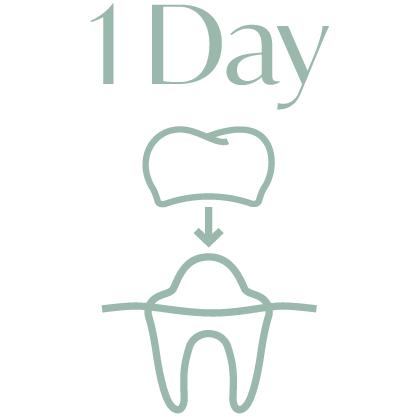
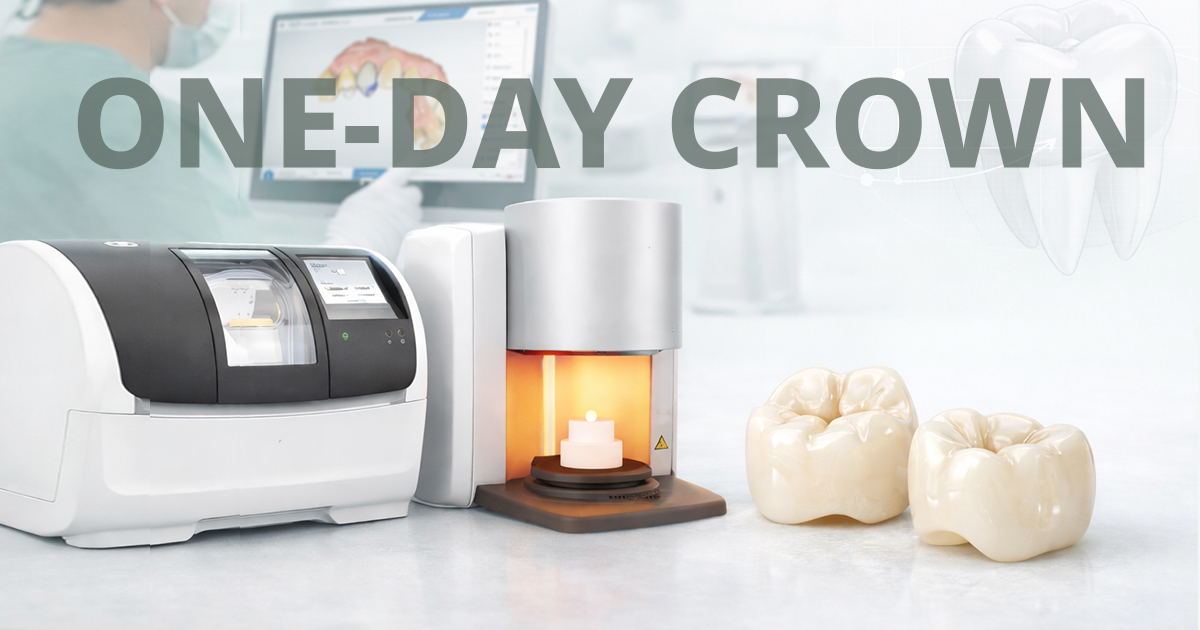
A crown is a restoration that covers the whole tooth. With a normal procedure, a crown usually takes a couple of visits within 1-2 weeks to get done because it has to be sent to outside dental lab. With the advance technology, a one day crown can be done in just a single day depending on the situation. A one day crown, also known as a same-day crown or a CEREC crown, is a type of dental crown that can be created and placed in a single appointment, rather than requiring multiple visits to the dentist. This is accomplished using computer-aided design and manufacturing (CAD/CAM) technology, which allows a dentist to create a 3D digital model of the patient’s tooth and then design and mill custom-fitted crowns in one visit.
With a one day crown, the dentist can prepare the tooth, create the crown, and place it all in one appointment, usually within a few hours. This eliminates the need for a temporary crown and reduces the amount of time and inconvenience for the patient. However, not all dentists offer this technology, and it may not be suitable for all types of dental restorations or for all patients. It is best to consult with your dentist to see if getting crowns in one visit is right for you.
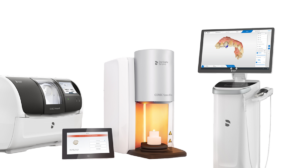
At Global Dental Complex, we have our own digital dental lab that can process a crown within hours. Patient can wait and get the crown cemented within that day. There is no need to come back or another visit. Inlay and onlay can also be done within one day.
Please note that only all ceramic crown can be done with this process.
Our One Day Crown Procedure in Bangkok
1. Dentist will remove caries and prepare the tooth for a crown.
2. Scan the prepared tooth and send digital file to design center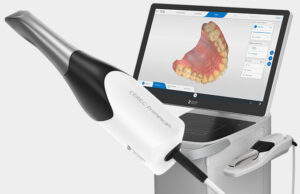
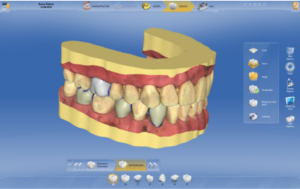
3. Digital lab technician will design definitive crown in the computer (CAD).
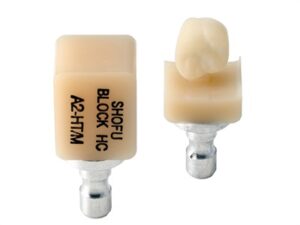
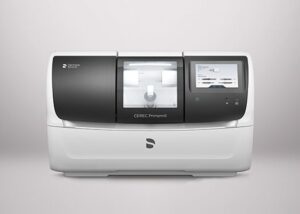
 4. Then, the milling machine will mill the crown from ceramic block (Usually take couple hours).
5. Definitive crown will be adjusted and cemented on the tooth the same day.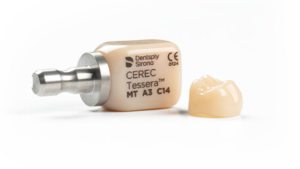
If you are considering high-quality and affordable crowns in one visit, have questions on one day crowns, or to schedule an appointment, contact Global Dental Complex today.
One Day Crown: Same-Day Dental Crown for Fast Tooth Restoration
A damaged, cracked, weakened, or heavily filled tooth often needs a dental crown to restore strength and function. Traditionally, getting a crown may require multiple appointments, temporary crowns, and waiting for a dental laboratory to complete the final restoration. With modern digital dentistry, a One Day Crown may allow selected patients to receive a custom dental crown in a single visit.
A One Day Crown, also known as a same-day crown or CAD/CAM crown, is designed, created, and placed on the tooth during the same appointment. The dentist uses digital scanning and computer-aided design technology to create the crown, which is then milled from a ceramic block and bonded to the prepared tooth.
This option can be convenient for patients who want to restore a tooth quickly without wearing a temporary crown for several days or weeks. However, not every tooth or dental condition is suitable for a same-day crown. A dental examination is needed to confirm whether this treatment is appropriate for your case.
What Is a One Day Crown?
A One Day Crown is a dental crown that can be completed in one visit using digital technology. Instead of taking a traditional impression and sending it to a dental laboratory, the dentist uses an intraoral scanner to capture a digital model of your tooth.
The crown is then designed using dental software and fabricated in the clinic or through an in-office milling system. Once the crown is ready, the dentist checks the fit, shape, bite, and color before bonding it permanently to the tooth.
The goal is the same as a traditional crown: to protect a weakened tooth, restore chewing function, and improve the appearance of the smile. The main difference is the faster workflow and digital production process.
When Do You Need a Dental Crown?
A dental crown is recommended when a tooth needs more protection than a normal filling can provide. Crowns are commonly used for teeth that have lost a large amount of structure or are at risk of breaking.
You may need a One Day Crown or traditional crown if you have:
- A cracked or fractured tooth
- A large cavity that cannot be restored with a filling
- A tooth with a large old filling
- A tooth that has had root canal treatment
- A heavily worn tooth from grinding or acid erosion
- A broken cusp or weakened biting surface
- A discolored or misshapen tooth that needs full coverage
- A tooth that needs protection before it breaks further
The dentist will evaluate how much healthy tooth structure remains before deciding whether a crown, onlay, inlay, filling, or other restoration is most suitable.
How Does a One Day Crown Work?
A One Day Crown is made using a digital dental workflow. This allows the dentist to prepare, scan, design, mill, and place the crown during one visit in suitable cases.
1. Dental Examination
The dentist first examines the tooth, gums, bite, and surrounding structures. X-rays may be taken to check decay depth, root condition, old fillings, and whether the tooth needs root canal treatment before receiving a crown.
2. Tooth Preparation
The damaged or weakened part of the tooth is removed, and the tooth is shaped to support the crown. The dentist prepares enough space for the ceramic crown while preserving as much healthy tooth structure as possible.
3. Digital Scan
Instead of using traditional impression material, the dentist scans the prepared tooth and surrounding teeth with an intraoral scanner. The scan creates a digital 3D model used to design the crown.
4. Crown Design
The crown is designed on dental software. The dentist adjusts the shape, contour, contact points, and bite relationship so the crown fits properly and functions comfortably.
5. Crown Milling
The crown is milled from a ceramic block using a milling machine. This step creates the physical crown based on the digital design.
6. Fitting and Adjustment
The dentist checks the crown in your mouth to make sure it fits accurately. Adjustments may be made to the bite, contact, shape, or polish before final placement.
7. Final Bonding
Once the fit and bite are correct, the crown is bonded to the tooth. After bonding, the dentist checks your bite again and polishes the crown for comfort.
Benefits of a One Day Crown
1. Completed in a Single Visit
The biggest advantage of a One Day Crown is convenience. In suitable cases, the tooth can be prepared and restored with the final crown during one appointment, reducing the need for multiple visits.
2. No Temporary Crown Needed
Traditional crown treatment often requires a temporary crown while the final crown is made at a laboratory. Temporary crowns can sometimes feel loose, rough, or sensitive. With a same-day crown, the final restoration may be placed immediately.
3. Digital Impression Comfort
Many patients prefer digital scanning over traditional impression trays. A digital scan is usually quicker and more comfortable, especially for patients with a sensitive gag reflex.
4. Natural-Looking Ceramic Restoration
Many One Day Crown restorations are made from tooth-colored ceramic materials. These can be matched to the surrounding teeth and designed to look natural in the smile.
5. Protects the Tooth Quickly
A weakened tooth can be restored and protected on the same day, which may reduce the risk of temporary crown issues or further tooth damage while waiting for a laboratory crown.
6. Digital Precision
Digital scanning and CAD/CAM design can help create a crown with accurate fit and shape when performed properly. The dentist can also review the digital design before milling the restoration.
Is a One Day Crown Suitable for Everyone?
A One Day Crown is not suitable for every case. Some teeth require additional treatment, more complex shade matching, laboratory customization, gum treatment, root canal treatment, or implant planning before a final crown can be placed.
A same-day crown may be suitable if:
- The tooth has enough healthy structure to support a crown
- The gum tissue around the tooth is healthy
- The tooth does not need complex root canal or periodontal treatment first
- The bite can be managed predictably
- The required crown material is appropriate for the tooth location
- The desired shade and aesthetics can be achieved with same-day ceramic
In more complex cosmetic cases, front tooth cases requiring high shade detail, multiple crowns, bridges, or implant crowns, a laboratory-made restoration may still be recommended.
One Day Crown vs. Traditional Dental Crown
Both same-day crowns and traditional crowns are designed to restore and protect teeth. The main difference is how the crown is made and how long the process takes.
A traditional crown usually requires at least two visits. The dentist prepares the tooth, takes an impression or scan, places a temporary crown, and sends the case to a dental laboratory. The final crown is placed at a later appointment.
A One Day Crown uses digital scanning and in-office milling to complete the restoration in one visit when suitable. This can save time and avoid a temporary crown.
However, traditional laboratory crowns may still be preferred when the case requires advanced layering, highly customized aesthetics, complex bite design, bridges, or special materials.
What Materials Are Used for One Day Crowns?
Many same-day crowns are made from ceramic materials that can be milled in the clinic. These materials are designed to provide a balance of strength, appearance, and bonding ability.
Common materials may include:
- Ceramic blocks for natural-looking crowns
- Lithium disilicate ceramic in selected cases
- Hybrid ceramic or resin-ceramic materials
- Zirconia in clinics with suitable systems and workflow
The best material depends on the tooth location, bite force, aesthetic needs, remaining tooth structure, and whether the patient grinds or clenches. Your dentist will recommend the material that fits your case best.
One Day Crown for Front Teeth
Front teeth require careful attention to color, translucency, shape, and symmetry. A One Day Crown may be possible for some front tooth cases, especially when the shade is straightforward and the aesthetic demand is moderate.
However, if the front tooth requires highly detailed shade matching, layered porcelain, or matching a single crown perfectly to neighboring natural teeth, a laboratory-made crown may provide more customization. The dentist will explain which option is more suitable for your smile.
One Day Crown for Back Teeth
Back teeth often need strength because they handle heavy chewing forces. A One Day Crown can be a good option for many molars and premolars when the ceramic material is strong enough and the bite can be adjusted properly.
Patients who grind or clench their teeth may need special consideration. In some cases, a night guard may be recommended after crown placement to protect the restoration from excessive force.
One Day Crown After Root Canal Treatment
Teeth that have had root canal treatment often need crowns, especially back teeth. After root canal treatment, the tooth may be more vulnerable to fracture if a large amount of structure has been lost.
A One Day Crown may be suitable after root canal treatment if the tooth is stable, there is enough remaining structure, and the gum condition is healthy. In some cases, a core build-up may be needed before the crown is made.
Does a One Day Crown Hurt?
The procedure is usually performed with local anesthesia if tooth preparation may cause discomfort. You may feel pressure, vibration, or water spray during preparation, but sharp pain should not be felt when the tooth is properly numb.
After the crown is placed, mild sensitivity or gum tenderness may occur temporarily. If the bite feels high, the crown feels uncomfortable, or pain persists, you should return to the dentist for adjustment.
How Long Does a One Day Crown Last?
The lifespan of a One Day Crown depends on the material, tooth condition, bite force, oral hygiene, crown fit, and daily habits. Same-day ceramic crowns can last many years when properly designed, bonded, and maintained.
Factors that can shorten crown lifespan include teeth grinding, biting hard objects, poor oral hygiene, decay around the crown margin, gum disease, or untreated bite problems. Regular dental check-ups help monitor the crown and surrounding tooth structure.
How to Care for a One Day Crown
A crown protects the tooth, but it does not make the tooth immune to problems. The natural tooth under the crown can still develop decay near the margin if plaque is not controlled.
To care for your One Day Crown:
- Brush twice daily with fluoride toothpaste
- Floss or clean between teeth every day
- Avoid biting hard objects such as ice, pens, or nutshells
- Wear a night guard if you grind your teeth
- Attend regular dental check-ups
- Report looseness, pain, or bite discomfort early
- Clean carefully around the gumline of the crown
One Day Crown vs. Dental Filling
A dental filling repairs a smaller area of tooth damage. A crown covers and protects the entire visible part of the tooth. If the cavity or fracture is small, a filling may be enough. If the tooth is heavily damaged, cracked, or weakened, a crown may provide better protection.
Your dentist will recommend the most conservative treatment that can restore the tooth safely and predictably.
One Day Crown vs. Inlay or Onlay
An inlay or onlay is a partial restoration used when the tooth needs more support than a filling but does not require a full crown. In some cases, CAD/CAM technology can also be used to make same-day inlays or onlays.
If enough healthy tooth structure remains, an onlay may preserve more natural tooth than a full crown. If the tooth is very weak or has multiple cracks, a crown may be more appropriate.
One Day Crown for International Patients
A One Day Crown can be convenient for travelers, expats, or international patients who have limited time for dental appointments. Since the crown may be completed in one visit, it can reduce the need for multiple trips to the clinic.
However, patients should still allow enough time for consultation, diagnosis, possible X-rays, tooth preparation, crown design, milling, bonding, and bite adjustment. Complex cases may require more than one visit or a traditional laboratory crown.
When a One Day Crown May Not Be Recommended
A same-day crown may not be the best option in every situation. Your dentist may recommend a traditional crown or additional treatment first if:
- The tooth has deep infection and needs root canal treatment first
- There is active gum disease around the tooth
- The tooth is broken far below the gumline
- The case requires highly customized front tooth aesthetics
- Multiple crowns or a full smile design are being planned
- A bridge is needed instead of a single crown
- The bite is unstable or complex
- The clinic does not have the appropriate same-day material for your case
The best crown is not always the fastest crown. The priority should be a restoration that fits well, functions properly, and protects the tooth long term.
Risks and Limitations
Like any dental treatment, a One Day Crown has risks and limitations. Possible issues include temporary sensitivity, bite discomfort, crown chipping, debonding, color mismatch, gum irritation, or decay around the crown margin over time.
Same-day crowns depend on proper case selection, accurate scanning, precise design, good bonding, and careful bite adjustment. If the tooth has structural or gum problems, these must be managed before or during treatment.
Questions to Ask Your Dentist
Before getting a One Day Crown, useful questions include:
- Is my tooth suitable for a same-day crown?
- Would an onlay, filling, or traditional crown be better?
- What material will be used?
- Will the crown match my natural teeth?
- Do I need root canal treatment first?
- How long will the appointment take?
- Will I need a night guard?
- How long is the crown expected to last?
- What should I avoid after placement?
Conclusion: One Day Crown Offers Fast and Convenient Tooth Restoration
A One Day Crown can restore a damaged or weakened tooth in a single visit using digital scanning, CAD/CAM design, and in-office ceramic milling. It is a convenient option for suitable cases and can help patients avoid temporary crowns and multiple appointments.
Same-day crowns can restore strength, function, and appearance, but they are not the best choice for every tooth. Proper diagnosis, material selection, bite planning, and long-term maintenance are essential for a successful result.
If you have a cracked tooth, large filling, worn tooth, or root canal treated tooth, a dental consultation can help determine whether a One Day Crown is the right option for your smile.
Frequently Asked Questions About One Day Crown
What is a One Day Crown?
A One Day Crown is a dental crown that can be designed, made, and placed in a single visit using digital scanning and CAD/CAM technology.
Is a One Day Crown as strong as a traditional crown?
A same-day crown can be strong and durable when the right material is used for the right case. However, some complex cases may still benefit from a traditional laboratory-made crown.
How long does a One Day Crown appointment take?
The appointment time varies depending on the tooth and clinic workflow. It includes tooth preparation, digital scanning, crown design, milling, fitting, and bonding.
Do I need a temporary crown?
Usually no. One of the benefits of a One Day Crown is that the final crown may be placed during the same visit, avoiding the need for a temporary crown.
Can I get a One Day Crown for a front tooth?
Sometimes. A same-day crown may work for selected front tooth cases, but highly aesthetic cases may require a laboratory-made crown for more detailed shade matching.
Does getting a One Day Crown hurt?
The procedure is usually done with local anesthesia when needed. You may feel pressure or vibration, but sharp pain should not be felt during treatment.
How do I care for a One Day Crown?
Brush, floss, clean around the gumline, avoid biting hard objects, attend regular check-ups, and wear a night guard if your dentist recommends one for grinding or clenching.