



































Ready to care for your smile with confidence.
For more information or to schedule a consultation with a dentist at Global Dental Complex, please contact us.
📞 Call / WhatsApp: (+66) 065-669-9191
💬 LINE: @globaldentalcpx
🌐 Website: globaldentalcomplex.com/th
Book your consultation today and start planning the treatment that is right for you.
3D Dental Check Up & Oral Examination in Bangkok

In general, you need to have your teeth check-up every 6 months for cavity, gum disease, or any disease before the problems get bigger or more complicated. In some cases, that tooth has to be pulled due to extensive decay or severe gum disease. When teeth or gum start to have cavity or gum disease, patients do not have any symptoms causing them to think that no symptoms means no disease. Therefore, patients will only go see dentist when they have symptoms which is incorrect. When your teeth or gum have symptoms, it means that the problem is severe such as toothache means this tooth will probably need root canal treatment not just filling. So, dental check-up every 6 months is a must and not to be neglected. This is because when dentist find the problem out early, the treatment is easily solved with less time and cost. However, if you wait until the symptoms show, then the treatment will be more complicated with more time, visits, and cost. From now on, if you receive a call or email from us for your dental check-up, please do not hesitate to make appointment. It is only for your own good oral hygiene. It’s just like bringing you car for maintenance every 10,000 kilometer but instead it’s your own teeth.
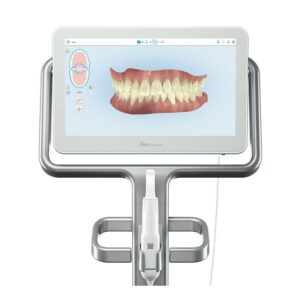
At Global Dental Complex, we have the newest innovation for 3D Oral Examination using intra-oral scanner. Patients can see their own teeth and gum three dimensional on a big screen together with our dentists. You can see tooth decayed and gum disease directly with your own eyes. You will know the treatment for each tooth. At Global Dental Complex, we also have the largest Dental CT scan and x-ray in Asia-Pacific. You can come experience the most advance dental technology here at Global Dental Complex.
What is a 3D Dental Checkup?
At Global Dental Complex, we believe that dental check-up is an important part to make your teeth healthy and smile confidently. With our advance technology, our patients will not only receive traditional dental check-up but also using getting three dimensional oral examination. By using intraoral scanner, our dental specialists can locate and show the problems together with the patients in a big screen. Dental cavity, calculus, gum disease or even oral lesion can easily be seen clearly in three dimension. Therefore, the 3D dental check-up is much more thorough and accurate than traditional one. Moreover, in some cases may need x-ray or Cone-Beam Computed Tomography (CBCT) Scan to get more information to formulate the best treatment plan for each of our patients. With this advance technology combining with extensive experience from our renowned team of dental specialists, our patients can be fully confident that they are in good hands.
Why Regular Dental Checkups are Essential
Most of patients will only come to see dentist when they start to experience problems. Most of the time, these problems are severe. This is because early dental cavity or gum disease, it will not have any symptoms. When you experience any dental symptoms, it is quite severe problems such as deep cavity or severe gum disease, etc. Therefore, regular dental check-up allows our dental specialists to see if you have any dental cavity, gum disease, or any dental problems. In case you have those problems that we found in regular dental check-up (every 6 months), it is normally in early stage which is usually easy to fix and cause less time and money.
What to Expect During Your Dental Checkup
At each check-up, our dental specialists will:
- 3D dental check-up your teeth, gums and mouth
- X-rays
- Thorough teeth cleaning
How Often Should You Have a Dental Checkup?
Every 6 months is standard for dental check-up. However, in some patients, who are unable to take good care of their oral hygiene, may have to come every 2-3 months. Our dental specialists will inform patients after dental check-up. Contact Global Dental Complex for more information or to make an appointment today.
3D Dental Check Up: A More Complete View of Your Oral Health
A regular dental check up helps detect cavities, gum problems, and visible changes in the mouth. However, some dental issues are hidden beneath the surface and cannot be fully evaluated by visual examination alone. A 3D Dental Check Up provides a more detailed view of the teeth, jawbone, roots, sinuses, nerves, and surrounding structures, allowing the dentist to diagnose and plan treatment with greater precision.
A 3D Dental Check Up usually involves advanced dental imaging, such as cone beam computed tomography, also known as CBCT. Unlike traditional 2D X-rays, 3D imaging creates a three-dimensional view of the mouth and jaw. This helps dentists evaluate complex conditions more accurately and identify problems that may not be clearly visible on standard dental X-rays.
This type of check up can be especially useful before dental implant treatment, wisdom tooth removal, root canal assessment, orthodontic planning, jaw evaluation, or when a patient has unexplained pain that requires deeper investigation.
What Is a 3D Dental Check Up?
A 3D Dental Check Up is a dental examination that uses three-dimensional imaging to evaluate oral and jaw structures in greater detail. The scan captures images from different angles and reconstructs them into a 3D view that the dentist can analyze on a computer.
With 3D imaging, the dentist can assess the height, width, and density of the jawbone, the position of tooth roots, impacted teeth, nerve pathways, sinus areas, and other anatomical structures. This information is especially valuable when planning treatments that require accuracy and safety.
While a normal dental check up focuses on visual examination, gum assessment, and sometimes 2D X-rays, a 3D Dental Check Up provides deeper diagnostic information when the case requires it.
Why 3D Dental Imaging Matters
Many dental conditions involve structures that cannot be seen directly. For example, an impacted wisdom tooth may sit close to a nerve, a dental implant site may have limited bone, or a root canal problem may involve hidden anatomy around the root. Traditional X-rays can provide useful information, but they show the mouth in flat images.
A 3D Dental Check Up allows the dentist to view the area from multiple directions. This can help reduce uncertainty, improve treatment planning, and support more personalized care. It does not replace the dentist’s clinical judgment, but it adds important information for selected cases.
Who May Benefit from a 3D Dental Check Up?
Not every patient needs 3D imaging at every dental visit. Your dentist will recommend it when the additional information is useful for diagnosis, safety, or treatment planning. A 3D Dental Check Up may be suitable for patients who need a more detailed evaluation of their teeth, jawbone, or oral structures.
You may benefit from a 3D dental scan if you are considering or experiencing:
- Dental implant treatment
- Wisdom tooth assessment or removal
- Complex root canal problems
- Unexplained tooth pain or jaw discomfort
- Orthodontic treatment planning
- Jawbone evaluation before surgery
- Bone grafting or sinus lift planning
- Impacted or unerupted teeth
- Temporomandibular joint or bite-related concerns
- Previous dental treatment that needs detailed review
Benefits of a 3D Dental Check Up
1. More Accurate Diagnosis
A 3D Dental Check Up gives the dentist a more complete view of the teeth and jaw compared with visual examination alone. This can help identify hidden infections, root problems, bone defects, impacted teeth, or anatomical variations that may affect treatment.
2. Better Dental Implant Planning
For dental implants, 3D imaging is highly valuable because the dentist needs to know the amount and quality of bone available. A scan can show bone height, width, density, nerve location, and sinus position. This helps the dentist plan implant placement more safely and accurately.
3. Safer Wisdom Tooth Evaluation
Impacted wisdom teeth can sometimes be close to important nerves or sinuses. A 3D Dental Check Up can help evaluate the relationship between the tooth and nearby structures before removal. This supports better risk assessment and treatment planning.
4. Improved Root Canal Assessment
Some root canal problems are difficult to diagnose with standard X-rays. 3D imaging may help detect hidden canals, root fractures, persistent infection, or bone changes around the root tip. This can be useful when a tooth has ongoing symptoms after previous treatment.
5. Personalized Treatment Planning
Every mouth is different. A 3D scan helps the dentist understand the patient’s specific anatomy, which can lead to a more personalized treatment plan. This is especially important for complex procedures where millimeters can make a difference.
3D Dental Check Up for Dental Implants
Dental implant treatment requires careful planning because the implant must be placed in the right position, angle, and depth. If there is not enough bone, or if the implant is placed too close to a nerve or sinus, complications may occur.
A 3D Dental Check Up helps the dentist evaluate whether the jawbone is suitable for an implant. It can also help determine whether additional procedures such as bone grafting or sinus lift may be needed before implant placement.
In some cases, the 3D scan may be used to create a digital treatment plan or surgical guide. This can support more precise implant placement and improve communication between the dentist and patient.
3D Dental Check Up for Wisdom Teeth
Wisdom teeth can grow at unusual angles, become impacted, or remain partially covered by gum tissue. When wisdom teeth are close to nerves, roots of nearby teeth, or the sinus area, removal may require careful planning.
A 3D Dental Check Up allows the dentist to see the exact position of the wisdom tooth and its relationship to surrounding structures. This helps explain the difficulty level of the case and supports safer decision-making before extraction or surgery.
3D Dental Check Up for Root Canal Problems
Root canal diagnosis can be complex because the tooth root system is small and may have hidden canals, curves, fractures, or infection at the root tip. Standard X-rays may not always show the full picture.
With a 3D Dental Check Up, the dentist can examine the tooth from different angles. This may help identify the cause of persistent pain, swelling, or infection after root canal treatment. It may also help determine whether root canal retreatment, microscopic apical surgery, or extraction is the most appropriate option.
What Happens During a 3D Dental Check Up?
1. Dental Consultation
The dentist will begin by asking about your symptoms, concerns, dental history, medical history, and treatment goals. If you are planning a specific treatment, such as implants or wisdom tooth removal, the dentist will focus on the relevant area.
2. Clinical Examination
Your teeth, gums, bite, jaw movement, and oral tissues may be checked. The dentist may look for cavities, gum inflammation, worn teeth, cracked teeth, swelling, or signs of infection.
3. 3D Scan
If 3D imaging is needed, the scan is usually quick and non-invasive. You will be positioned in the scanner, and the machine will rotate around your head to capture the images. The scan creates a detailed 3D view of your dental structures.
4. Image Review
The dentist will review the scan on a computer. The image can be viewed from different angles and cross-sections, allowing detailed assessment of the teeth, roots, bone, nerves, and sinuses.
5. Diagnosis and Treatment Plan
After reviewing the findings, the dentist will explain what the scan shows and recommend the next steps. This may include preventive care, monitoring, dental treatment, referral to a specialist, or a detailed treatment plan.
Is a 3D Dental Check Up Safe?
A 3D Dental Check Up uses dental imaging technology that involves radiation, so it should be used only when clinically necessary. Dentists recommend 3D scans when the diagnostic benefit outweighs the radiation exposure.
Modern dental CBCT machines are designed to capture focused images with controlled exposure. The scan area can often be adjusted depending on the clinical need. Patients should inform the dentist if they are pregnant, may be pregnant, or have medical conditions that require special consideration.
How Is a 3D Dental Check Up Different from a Regular Dental Check Up?
A regular dental check up usually includes visual examination, gum assessment, and sometimes 2D dental X-rays. This is enough for many routine dental concerns such as cavities, plaque buildup, gum inflammation, or visible tooth problems.
A 3D Dental Check Up provides additional information by showing the teeth and jaw in three dimensions. It is especially useful for complex diagnosis and treatment planning. However, it is not always needed for every patient or every dental visit.
3D Dental Check Up vs. 2D Dental X-Ray
2D X-rays are useful for many common dental problems. They can show cavities between teeth, bone levels, root shapes, and some infections. However, because they are flat images, overlapping structures can sometimes hide details.
A 3D Dental Check Up provides depth and multiple viewing angles. This helps the dentist evaluate structures more clearly, especially when planning surgery, implants, root canal treatment, or complex extractions.
What Problems Can a 3D Dental Check Up Detect?
Depending on the scan area and clinical purpose, a 3D Dental Check Up may help detect or evaluate:
- Bone loss around teeth
- Hidden dental infections
- Impacted wisdom teeth
- Jawbone defects
- Root fractures in selected cases
- Complex root canal anatomy
- Sinus-related dental concerns
- Jaw cysts or lesions
- Tooth position before orthodontic treatment
- Nerve location before dental surgery
The scan is interpreted together with symptoms, clinical examination, and dental history. Imaging alone does not replace a full dental diagnosis.
Preparing for a 3D Dental Check Up
Preparing for a 3D Dental Check Up is usually simple. You may be asked to remove metal objects such as earrings, glasses, hairpins, removable dentures, or jewelry that could affect the scan image.
Before your appointment, it is helpful to prepare:
- Your main dental concern or symptom
- Previous dental X-rays or treatment records, if available
- Information about previous root canal treatment, implants, or surgery
- Medical conditions and medications
- Pregnancy status, if applicable
- Questions about recommended treatment options
Do You Always Need a 3D Dental Check Up?
No. A 3D Dental Check Up is not required for every patient. For simple dental problems, a regular examination and standard X-rays may be enough. Your dentist will recommend 3D imaging only when it provides useful information for diagnosis or treatment planning.
Patients should not think of 3D imaging as “better for everything.” It is most valuable when the dentist needs to understand complex anatomy, hidden structures, or treatment risks in greater detail.
Questions to Ask Your Dentist
If your dentist recommends a 3D Dental Check Up, you may want to ask:
- Why do I need a 3D scan?
- What information will the scan provide?
- Will a 2D X-ray be enough for my case?
- Which area will be scanned?
- How will the scan affect my treatment plan?
- Are there any risks I should know about?
- Can the scan be used for implant or surgical planning?
- Will I receive an explanation of the scan findings?
Conclusion: A 3D Dental Check Up Helps Dentists See More Before Treating
A 3D Dental Check Up provides a detailed three-dimensional view of the teeth, roots, jawbone, nerves, and surrounding structures. It can help dentists diagnose hidden problems, plan complex treatment, and explain dental conditions more clearly to patients.
This type of check up is especially useful for dental implants, wisdom teeth, root canal issues, orthodontic planning, and jawbone assessment. While it is not necessary for every routine visit, it can be an important tool when deeper information is needed.
If you have unexplained dental pain, are planning dental implant treatment, need wisdom tooth evaluation, or want a more detailed assessment of your oral health, a 3D Dental Check Up may help your dentist create a safer and more accurate treatment plan.
Frequently Asked Questions About 3D Dental Check Up
What is a 3D Dental Check Up?
A 3D Dental Check Up is a dental examination that uses three-dimensional imaging to evaluate teeth, roots, jawbone, nerves, sinuses, and other oral structures in greater detail than a standard visual exam or 2D X-ray.
Is a 3D Dental Check Up the same as a regular dental check up?
No. A regular check up usually includes visual examination and sometimes 2D X-rays. A 3D Dental Check Up uses advanced imaging to provide a deeper view when more detailed diagnosis or treatment planning is needed.
Who should consider a 3D Dental Check Up?
It may be recommended for patients planning dental implants, wisdom tooth removal, complex root canal treatment, orthodontics, jaw surgery, or patients with unexplained dental pain.
Is a 3D Dental Check Up safe?
3D dental imaging uses radiation, so it should be used only when clinically necessary. Modern dental imaging systems are designed to use controlled exposure, and your dentist will recommend it when the benefits outweigh the risks.
How long does a 3D dental scan take?
The scan itself is usually quick and non-invasive. The total appointment time depends on the consultation, examination, image review, and explanation of findings.
Can a 3D Dental Check Up detect hidden infections?
In some cases, 3D imaging can help detect hidden infections, bone changes, or root problems that may not be clear on standard X-rays. Diagnosis also depends on symptoms and clinical examination.
Do I need a 3D Dental Check Up before dental implants?
Many implant cases benefit from 3D imaging because the dentist needs to assess bone volume, nerve location, sinus position, and implant placement direction before treatment.