


































Ready to care for your smile with confidence.
For more information or to schedule a consultation with a dentist at Global Dental Complex, please contact us.
📞 Call / WhatsApp: (+66) 065-669-9191
💬 LINE: @globaldentalcpx
🌐 Website: globaldentalcomplex.com/th
Book your consultation today and start planning the treatment that is right for you.
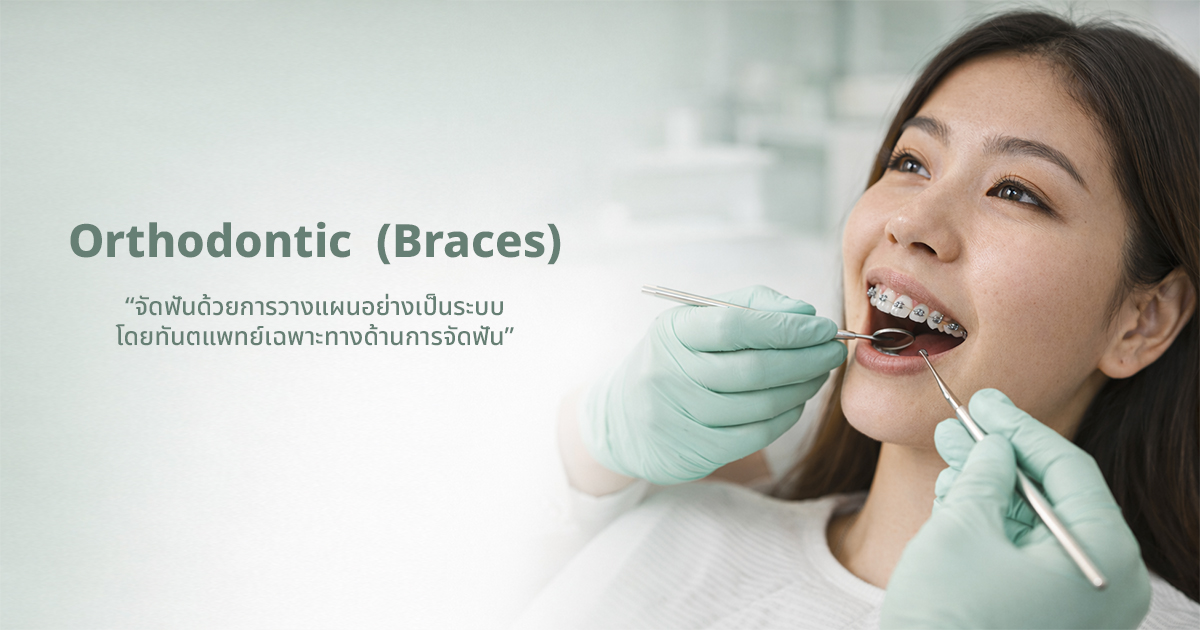
Orthodontic Braces in Bangkok | Global Dental Complex
What is Orthodontic Treatment?
Orthodontic treatment is a way of straightening, to improve the appearance of the teeth and how they function. It can also help to look after the long-term health of your teeth, gums and jaw joints, by spreading the biting pressure over all your teeth.
Benefits of Having Braces in Bangkok
- Straighten the teeth or move them into a better position. This can improve patient’s appearance and the way the teeth bite together, while also making them easier to clean.
- Some people have upper front teeth that stick out. These ‘prominent’ teeth are more likely to be damaged, but orthodontic treatment can move them back into line.
- When the teeth can’t bite correctly, this can put strain on the muscles of the jaw, causing jaw and joint problems and sometimes headaches. Orthodontic treatment can help you to bite more evenly and reduce the strain.
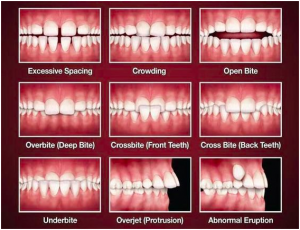
Type of orthodontic problem
At what age should I have orthodontic treatment?
The best time is generally during childhood, but adults can have orthodontic treatment too – and more and more are doing so. However, some problem needs early treatment. Regular check-up is important because your dentist will refer your child or you to orthodontist if you need the treatment.
What does it involve before you have the orthodontic treatment?
The most important thing is to have a full examination.
- Thorough intraoral examination
- Taking dental x-rays
- Making plaster models of your teeth or scan your teeth with intraoral scanner (itero)
- Taking intraoral and extraoral photos or Facial scan
After getting all information, your dental team or orthodontist will then discuss what treatment is possible. Once you are sure you want to go ahead, the treatment can start as soon as you have already no caries and calculus deposit.
Will I need to have taken out to make room?
Your orthodontist will tell you whether this is the case. Sometimes space can be made using other forms of treatment.
Types of Braces and Orthodontic Appliances
Orthodontic treatment can be done by many sorts of appliances.
There are 3 types of orthodontic appliance.
- Removable appliance
In the past, Simple treatment may be carried out with a removable appliance (a plate that can be taken out to be cleaned). It has delicate wires and springs attached, which move the teeth using gentle pressure. However, with advent of technology, clear aligner (Invisalign) can be used to treat complex case.
Invisalign: uses a series of clear plastic aligners to move your teeth into position. The aligners look like thin sports mouthguards and sit over your teeth. They arere removable and barely invisible to those around you.
- Fixed braces
Getting braces in Bangkok requires placing brackets on the teeth to be moved. A wire connects all the brackets and allows the teeth to be moved. You can’t take the appliance out yourself, so it is called a fixed appliance.
- Functional appliance
It is sometimes possible to change the way the jaws grow in growing patient, using a functional brace. This works by using the power of your jaw muscles and can help with certain types of problem.
Traditional vs. Self-Ligating Brackets
There are 2 type of brackets.
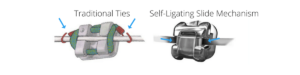
- Traditional bracket: the wire can connect with bracket by tying elastic band or wire to hold the wire in place.
- Self-ligating bracket: This doesn’t need the elastic band. The bracket itself has the clip to lock the wire. This allows the arch wire to move in response to your teeth. This means they operate with much less friction than traditional braces. The Damon system of self-ligating braces is the most popular.
What are the brackets made of?
- Metal : They’re the ‘original’ braces.
- Ceramic : Ceramic braces are much like traditional fixed metal braces, except for one difference. The brackets are made from ceramic material. Depending on the type of ceramic bracket you choose, they may be clear or tooth-coloured, that blend more naturally into your teeth.
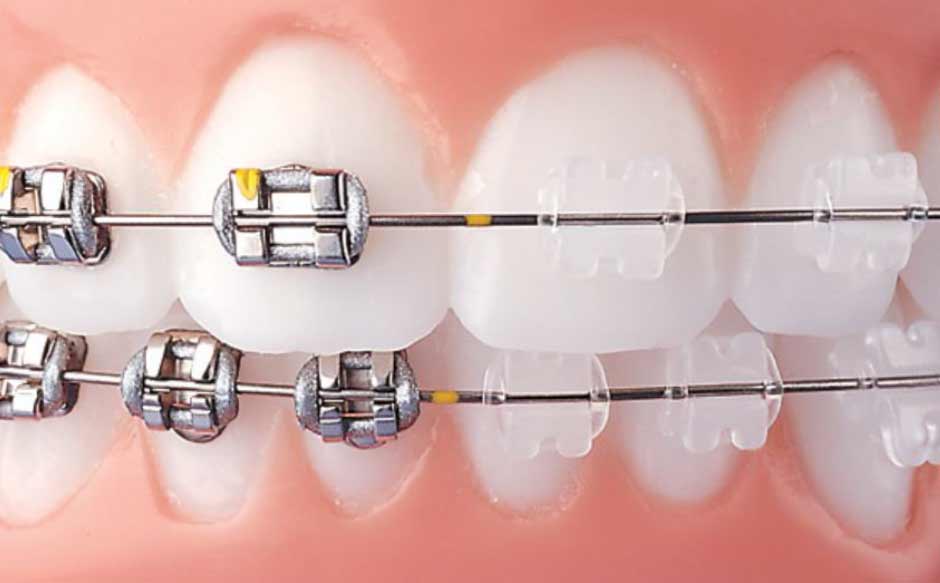
Duration and Frequency of Braces Treatment
The length of treatment depends on how severe the problem is, and it may take anything from a few months to two-and-a-half years. Most people can be treated in one to two years.
How many visits will it takes?
Orthodontic braces usually need adjusting every month while clear aligner’s visit is 6-8 weeks. Your orthodontist will tell you how often your brace will need adjusting.
What happens when the teeth are in the right position?
When treatment is finished the teeth need to be held in position for a time. The appliances that hold the teeth in place are called retainers.
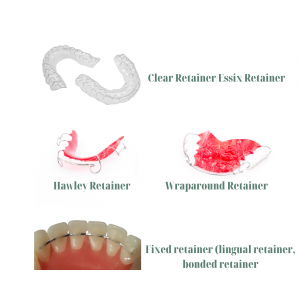
Type of retainer
- Removable retainer :Patient can remove by themselves
- Hawley Retainer /Wraparound retainer: This is the original retainer: a combination of a plastic plate molded to the roof or basin of your mouth, connected to a wire that runs across your teeth. It is simple, durable and easily removed.
- Clear retainer /Essix retainer: It is invisible. It’s made of medical-grade, BPA-free plastic and it’s removable. This retainer is specifically designed to fit snugly over your teeth.
- Fixed retainer (lingual retainer, bonded retainer)
This retainer consists of a thin, metal wire that’s bonded to the back of your teeth on the tongue side. When you smile, it’s not visible at all. Once in place, it stays there indefinitely. However, it can trap plaque, so oral hygiene will be important.
For more information on getting braces in Bangkok, or to schedule an appointment today, contact Global Dental Complex now.
Orthodontic Braces in Bangkok
Straight teeth can improve more than the appearance of your smile. Proper tooth alignment can support better chewing, easier cleaning, healthier gums, improved bite function, and long-term dental stability. Orthodontic Braces in Bangkok help children, teenagers, and adults correct crowded teeth, spacing, overbite, underbite, crossbite, open bite, and other orthodontic concerns through carefully planned tooth movement.
Orthodontic braces work by applying gentle, controlled pressure to move teeth into better positions over time. Treatment may involve metal braces, ceramic braces, self-ligating braces, lingual braces, clear aligners, or other orthodontic appliances depending on the patient’s age, bite condition, treatment goal, and lifestyle.
Whether you live in Bangkok, are an expat, or are visiting Thailand for dental care, orthodontic treatment should begin with a detailed examination. The orthodontist needs to evaluate your teeth, gums, jaw relationship, facial profile, bite, oral habits, and X-rays before recommending the most suitable treatment plan.
What Are Orthodontic Braces?
Orthodontic Braces in Bangkok are dental appliances used to move teeth gradually into improved alignment. Traditional braces use brackets attached to the teeth and wires that guide tooth movement. The orthodontist adjusts the appliance over time to move the teeth toward the planned position.
Braces can correct many types of malocclusion, including crowding, spacing, protruding teeth, deep bite, open bite, crossbite, and underbite. Dental braces are used in orthodontics to align and straighten teeth and help improve the way the teeth fit together in the bite. :contentReference[oaicite:0]{index=0}
Orthodontic treatment is not only cosmetic. Poorly aligned teeth can be harder to clean, may increase the risk of plaque buildup, and can contribute to uneven tooth wear or bite-related discomfort in some patients.
Who May Need Orthodontic Braces?
Braces may be recommended for patients who have tooth alignment or bite problems that affect appearance, function, cleaning, or long-term oral health. Treatment can be suitable for children, teenagers, and adults, as long as the teeth and gums are healthy enough for orthodontic movement.
You may benefit from Orthodontic Braces in Bangkok if you have:
- Crowded or overlapping teeth
- Gaps between teeth
- Protruding front teeth
- Deep bite
- Open bite
- Crossbite
- Underbite
- Overbite or overjet concerns
- Teeth that do not meet properly when biting
- Jaw shifting when closing the mouth
- Difficulty cleaning between crowded teeth
- Relapse after previous orthodontic treatment
The best treatment option depends on the severity of the problem. Mild cases may be suitable for clear aligners, while more complex bite problems may require fixed braces or orthodontics combined with other dental treatment.
Types of Orthodontic Braces
Metal Braces
Metal braces are the most traditional and widely used type of braces. They use stainless steel brackets and wires to move the teeth. Modern metal braces are smaller and more comfortable than older designs, and they can treat a wide range of orthodontic problems.
Metal braces may be recommended for children, teenagers, and adults who need reliable and effective tooth movement. They are often suitable for moderate to complex orthodontic cases.
Ceramic Braces
Ceramic braces work similarly to metal braces, but the brackets are tooth-colored or clear, making them less noticeable. They are popular among patients who want fixed braces but prefer a more discreet appearance.
Ceramic braces can be effective for many cases, but they may require more careful cleaning because the brackets can show stains around them if oral hygiene is poor.
Self-Ligating Braces
Self-ligating braces use brackets with a built-in clip or door to hold the wire, instead of elastic ties. They may reduce friction in some cases and can make appointments more efficient depending on the treatment plan.
They are available in metal and sometimes ceramic options. The benefits vary by case, so the orthodontist will explain whether self-ligating braces are appropriate for your teeth and bite.
Lingual Braces
Lingual braces are placed behind the teeth, on the tongue side, making them much less visible from the front. They can be a good option for patients who want fixed braces but prefer a hidden appliance. Lingual braces are attached to the inner sides of the teeth and are known for being less visible compared with standard braces. :contentReference[oaicite:1]{index=1}
However, lingual braces may take longer to adapt to, may affect speech at first, and may not be suitable for every bite or tooth shape.
Clear Aligners
Clear aligners are removable transparent trays that gradually move teeth. They are popular with adults and older teenagers because they are discreet and can be removed for eating, brushing, and flossing.
Clear aligners can be effective for many mild to moderate cases, but they require excellent patient cooperation. They must be worn for the recommended number of hours each day. More complex bite problems may still be better treated with braces or combined orthodontic methods.
Metal Braces vs. Ceramic Braces
Metal braces and ceramic braces work in similar ways, but they differ in appearance, durability, and maintenance. Metal braces are strong and suitable for many types of orthodontic problems. Ceramic braces are less visible and may be preferred by patients who want a more aesthetic option.
Ceramic brackets can be more fragile than metal brackets and may require careful eating habits. They may also be more noticeable if plaque or stains build up around them. Your orthodontist can help you decide which option suits your lifestyle, budget, and treatment needs.
Braces vs. Clear Aligners
Both braces and clear aligners can move teeth, but they are different in how they work. Braces are fixed to the teeth and work continuously. Aligners are removable and depend on patient compliance.
Clear aligners may be more convenient for eating and cleaning, but they must be worn consistently to be effective. Braces may be more suitable for complex tooth movements, severe crowding, certain bite problems, or patients who prefer not to worry about removing and wearing aligners correctly.
The best choice for Orthodontic Braces in Bangkok depends on the diagnosis, not only appearance. A proper orthodontic assessment is needed before choosing between braces and aligners.
Orthodontic Braces for Children
Children may need orthodontic evaluation when permanent teeth begin to erupt, especially if parents notice crowding, crossbite, underbite, protruding teeth, early loss of baby teeth, or jaw shifting. The American Association of Orthodontists commonly recommends children have an orthodontic check-up around age 7, because early evaluation can identify developing problems even if treatment is not needed immediately. :contentReference[oaicite:2]{index=2}
Not every child needs braces early. Some children only need monitoring, while others may benefit from interceptive orthodontic treatment such as expanders, space maintainers, or limited braces before full treatment later.
Orthodontic Braces for Teenagers
Teenagers are common orthodontic patients because most permanent teeth have erupted and growth is still active. Braces can help correct crowding, spacing, bite problems, and jaw-related concerns during this stage.
Teenagers may choose metal braces, ceramic braces, or clear aligners depending on case suitability and cooperation. Good oral hygiene is especially important during treatment because plaque can collect around brackets and wires.
Orthodontic Braces for Adults
Adults can also benefit from orthodontic treatment. Many adults choose Orthodontic Braces in Bangkok to improve smile appearance, correct crowding, prepare for implants or crowns, manage relapse from previous braces, or improve bite function.
Adult orthodontic treatment may require additional consideration because gum health, bone levels, old restorations, missing teeth, and bite wear can affect the plan. Before braces, the dentist or orthodontist may need to treat gum disease, cavities, or failing restorations.
The Orthodontic Treatment Process
1. Consultation and Examination
The orthodontist will examine your teeth, bite, gums, jaw relationship, facial profile, and smile. They will ask about your concerns, treatment goals, dental history, and whether you have had orthodontic treatment before.
2. X-Rays, Photos, and Digital Scan
Orthodontic records may include X-rays, facial photographs, intraoral photos, and a digital scan or impression of your teeth. These records help the orthodontist diagnose the problem and plan tooth movement safely.
3. Treatment Planning
The orthodontist will explain the recommended appliance, estimated treatment time, expected results, limitations, cost, and whether extractions, jaw surgery, expansion, or other dental treatment may be needed.
4. Braces Placement
For fixed braces, brackets are bonded to the teeth and wires are placed. The appointment is usually not painful, although teeth may feel sore for a few days afterward as they begin to move.
5. Adjustment Visits
You will need regular appointments so the orthodontist can adjust wires, change elastics, monitor tooth movement, and make sure treatment is progressing correctly.
6. Oral Hygiene Monitoring
Cleaning is very important during braces. The orthodontist may check plaque control and recommend special tools such as interdental brushes, floss threaders, fluoride toothpaste, or water flossers.
7. Braces Removal
When tooth alignment and bite correction are complete, the braces are removed. The teeth are cleaned and polished, and retainers are made to help maintain the result.
8. Retainer Phase
Retainers are essential after braces. Teeth can shift after orthodontic treatment, so retainers help hold the teeth in their new positions. Retainers are custom-made appliances used after orthodontic treatment to help maintain tooth position and reduce relapse risk. :contentReference[oaicite:3]{index=3}
How Long Does Orthodontic Treatment Take?
Treatment time varies depending on the severity of crowding, bite problem, age, appliance type, oral hygiene, and patient cooperation. Some mild cases may take less than a year, while more complex cases may take two years or longer.
Patients who miss appointments, break brackets frequently, do not wear elastics, or have poor oral hygiene may experience longer treatment time. Your orthodontist can provide a more accurate estimate after diagnosis.
Do Braces Hurt?
Braces placement itself is usually not painful. However, after braces are placed or adjusted, teeth may feel sore, tight, or sensitive for a few days. This is a normal response as the teeth begin to move.
Soft foods can help during the first few days after adjustment. Orthodontic wax may be used if brackets or wires irritate the cheeks or lips. If a wire is poking or a bracket breaks, contact the clinic for advice.
Eating with Braces
Patients with braces need to avoid foods that can break brackets, bend wires, or get stuck around the appliance. Eating carefully helps prevent emergency visits and treatment delays.
Foods to avoid or limit include:
- Hard candy
- Ice chewing
- Popcorn kernels
- Nuts and very hard snacks
- Sticky candy or caramel
- Chewing gum
- Hard crust bread
- Biting directly into apples or corn on the cob
Many foods can still be eaten if cut into smaller pieces. Your orthodontist will give specific instructions based on your appliance.
How to Clean Teeth with Braces
Good oral hygiene is critical during orthodontic treatment. Brackets and wires can trap plaque and food, increasing the risk of cavities, gum inflammation, and white spot lesions.
To care for your teeth during Orthodontic Braces in Bangkok:
- Brush after meals when possible
- Use fluoride toothpaste
- Clean carefully around brackets and gumline
- Use interdental brushes to clean between brackets
- Floss daily with floss threaders or orthodontic floss
- Use a water flosser if recommended
- Avoid frequent sugary snacks and drinks
- Attend regular dental cleaning appointments
Braces move teeth, but healthy gums and enamel are needed for a good final result.
Why Retainers Are Important After Braces
After braces are removed, teeth have a natural tendency to shift. Retainers help keep the teeth in their corrected positions while the surrounding bone and tissues adapt.
There are removable retainers and fixed retainers. Removable retainers are taken out for eating and cleaning. Fixed retainers are bonded behind the teeth and stay in place, but they require careful cleaning because plaque can build up around the wire.
Skipping retainers can lead to relapse, meaning the teeth may move back toward their previous positions. Your orthodontist will explain how often and how long you should wear your retainers.
Orthodontic Braces for Expats and International Patients in Bangkok
Bangkok is a convenient city for orthodontic care for residents, expats, and international patients. Orthodontic Braces in Bangkok may be suitable for patients who plan to stay in Thailand long enough for regular adjustment visits and follow-up care.
Orthodontic treatment usually requires ongoing visits over many months or years. If you travel frequently or may move to another country, discuss this with the orthodontist before starting treatment. Transferring orthodontic care between clinics can be possible, but it may involve additional records, fees, and treatment plan adjustments.
Can You Start Braces If You Have Cavities or Gum Disease?
Usually, cavities and gum disease should be treated before braces. Moving teeth in an unhealthy mouth can worsen dental problems and increase the risk of complications.
Before starting braces, your dentist may recommend fillings, gum treatment, teeth cleaning, extractions, or replacement of defective restorations. A stable oral foundation helps orthodontic treatment proceed more safely.
Do You Need Tooth Extraction for Braces?
Some orthodontic cases require tooth extraction to create space, correct protrusion, or improve bite balance. However, not every patient needs extractions. The decision depends on crowding, tooth size, jaw size, facial profile, bite relationship, and long-term stability.
Your orthodontist will explain why extraction is or is not recommended in your case. Patients should ask about alternatives and understand how extraction affects the final result.
Risks and Limitations of Orthodontic Braces
Orthodontic treatment is generally safe when properly planned and monitored, but it has risks and limitations. Possible issues include tooth sensitivity, gum inflammation, white spots, cavities, root shortening, relapse, temporary discomfort, bracket breakage, or treatment taking longer than expected.
Patients with poor oral hygiene, untreated gum disease, heavy grinding, or missed appointments may have higher risk of complications. Good cooperation is essential for a successful result.
Questions to Ask Before Getting Braces
Before starting Orthodontic Braces in Bangkok, useful questions include:
- What orthodontic problem do I have?
- Which type of braces is best for my case?
- Can I use clear aligners instead?
- How long will treatment take?
- Do I need tooth extraction?
- Do I need jaw surgery or other dental treatment first?
- How often are adjustment visits?
- What foods should I avoid?
- How should I clean my teeth with braces?
- What type of retainer will I need after treatment?
Conclusion: Orthodontic Braces Can Improve Smile Alignment and Bite Function
Orthodontic Braces in Bangkok can help correct crowded teeth, spacing, bite problems, and jaw-related orthodontic concerns for children, teenagers, and adults. Treatment can improve smile appearance, oral hygiene access, chewing function, and long-term dental stability when properly planned.
The best orthodontic result depends on accurate diagnosis, the right appliance, patient cooperation, oral hygiene, regular adjustment visits, and retainer use after treatment. If you are considering braces in Bangkok, a detailed orthodontic consultation is the best first step toward a healthier and more confident smile.
Frequently Asked Questions About Orthodontic Braces in Bangkok
What are Orthodontic Braces?
Orthodontic Braces in Bangkok are dental appliances used to gradually move teeth into better alignment and improve the bite. They may include metal braces, ceramic braces, self-ligating braces, lingual braces, or other orthodontic appliances.
How long do braces take?
Treatment time varies by case. Mild cases may take less than a year, while more complex bite or crowding problems may take two years or longer.
Are braces painful?
Braces are not usually painful when placed, but teeth may feel sore or tight for a few days after placement or adjustment. This is normal and usually improves.
Can adults get braces?
Yes. Adults can get braces if their teeth and gums are healthy enough for orthodontic movement. Gum health, bone support, old restorations, and missing teeth should be evaluated before treatment.
Are ceramic braces better than metal braces?
Ceramic braces are less visible, while metal braces are strong and widely used. The best choice depends on your case, aesthetic preference, budget, and orthodontist recommendation.
Do I need retainers after braces?
Yes. Retainers are needed after braces to help keep teeth in their new positions. Without retainers, teeth may shift back over time.
Can tourists get braces in Bangkok?
Braces require regular appointments over months or years, so they are usually better suited for residents, expats, or patients staying in Bangkok long term. Short-term visitors may need to consider treatment continuity before starting.