


































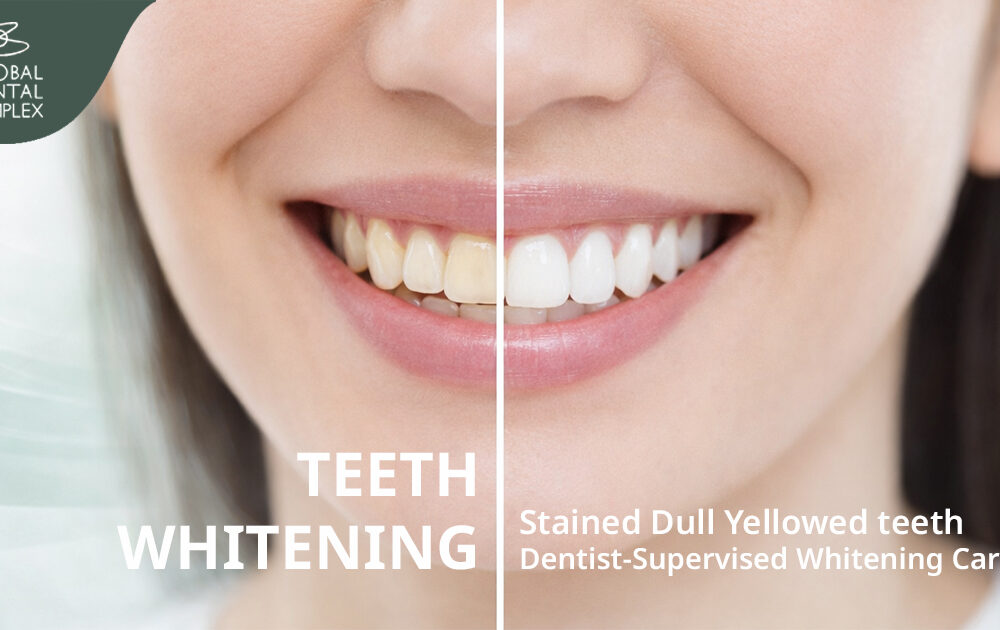

Ready to care for your smile with confidence.
For more information or to schedule a consultation with a dentist at Global Dental Complex, please contact us.
📞 Call / WhatsApp: (+66) 065-669-9191
💬 LINE: @globaldentalcpx
🌐 Website: globaldentalcomplex.com/th
Book your consultation today and start planning the treatment that is right for you.
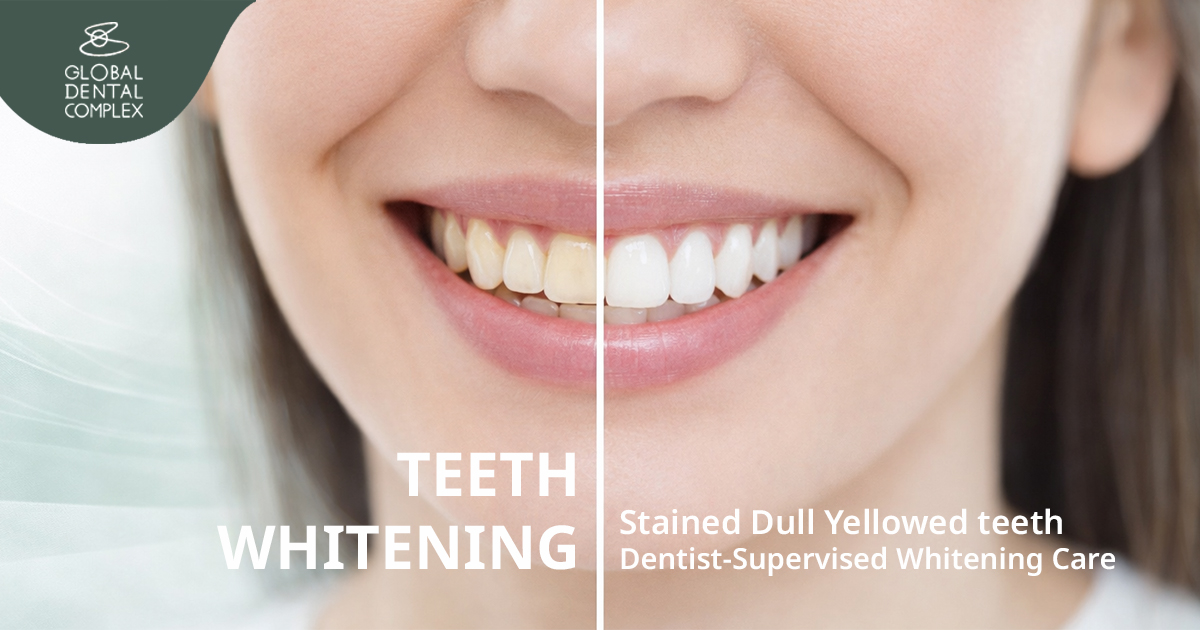
Professional Teeth Whitening in Bangkok | Global Dental Complex
What is Teeth Whitening or Bleaching?
Teeth whitening/bleaching is the way to restore the natural shade of the teeth. You can choose to have teeth whitening at dental office or do at your home. Zoom Teeth Whitening
There 2 types of teeth whitening.
- In-office teeth whitening (professional whitening, or chair-side whitening) is typically done with the dentist. The concentration of bleaching gel is higher than the one is available in market. Normally, teeth are whiter immediately after 2 hours.

Our In-Office Teeth Whitening Procedure
1.1 Before teeth whitening, your dentist will clean your teeth to remove calculus or stain from your teeth. Then, the pre-whitening tooth shade is selected for post-treatment comparison.
- Dentist will Isolate Teeth to be Whitened from your gum to prevent irritation of your gum and oral tissue from whitening agent. Also, you need to wear protective eye wear.
- After protection, whitening gel is applied on dried teeth.
- The whitening gel on teeth is activated using the light source. The light will help to activate the whitening gel to whiten your teeth more effective.
- Whitening gel is leaved for 15-20 minutes for each cycle. Light will be activated 2-4 cycles. This will take around 1.5-2 hours.
- After completing all cycle, dentist will remove whitening gel and dental dam.
- A shade evaluation is done to see how much whitening is achieved.
Custom Home Teeth Whitening Kits
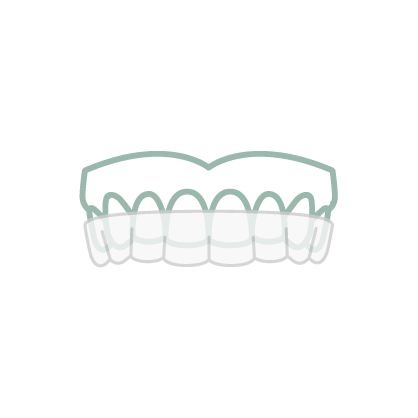
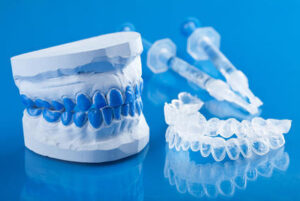
Patient will get the custom bleaching trays including whitening gel. Normally, teeth will get whiter and brighter in 2-3 weeks if you follow dentist’s instruction.
Steps
- Dentist will take impression of your upper and lower teeth to get the molds. The custom trays are made through the molds made of your teeth.
- After getting the custom trays, your dentist will insert the trays to check the fitness and give instruction on the application of gel, how to wear the tray and wearing time.
- The tray and whitening gel are worn for several hours over a period as prescribed by your dentist.
- Normally, the trays with whitening agent will wear during night or as prescribed by your dentist.
In-Office vs. Home Teeth Whitening Comparison
| In office teeth whitening | Custom tray teeth whitening | |
| Treatment time | Teeth get brighter in 2 hours | Need to bleach your teeth every day for 1 month to see the change |
| Sustainability for whitness | Teeth color can be dropped faster | Teeth color will be dropped slower |
| Cost | More expensive | Cheaper |
| Concentration of whitening gel | Higher | lower |
| Impression for mold | No need | Need to take impression to do the custom tray |
Note:
- The result after treatment cannot guarantee exactly due to many factors such as age, race, stain on teeth.
- In the same patient or even in the same tooth, color can be different in different area.
- Teeth whitening agent cannot whiten your dental fillings or crown. Thus, after teeth whitening, you need to redo the filling or crown to match the color.
- Fluorosis or tetracycline teeth do not response the whitening agent very well.
- The result of in-office teeth whitening is not permanent. Your teeth will get darker, or stain re-deposit depend on your lifestyle and food.
- To maintain your teeth’s color, your dentist will suggest you do home bleaching.
- Teeth whitening cannot whiten your teeth more than your natural color of your teeth. If you want to choose color shade of your teeth, dental veneer is another option.
For additional information, or questions on teeth whitening in Bangkok, Thailand, contact Global Dental Complex today
Teeth Whitening in Bangkok: Brighten Your Smile Safely and Professionally
A brighter smile can make you feel more confident when speaking, smiling, and meeting people. Over time, teeth may become yellow, dull, or stained from coffee, tea, red wine, smoking, aging, or certain foods. Teeth whitening in Bangkok is a popular cosmetic dental treatment for patients who want to improve tooth color safely under professional guidance.
Professional teeth whitening uses whitening agents to lighten the color of natural teeth. The active ingredients commonly used in whitening treatments are peroxide-based agents, such as hydrogen peroxide or carbamide peroxide, which help break down stain molecules within or on the tooth structure. Tooth discoloration can be extrinsic, meaning surface stains, or intrinsic, meaning deeper discoloration inside the tooth; the correct treatment depends on the type and cause of discoloration. :contentReference[oaicite:0]{index=0}
For local residents, expats, and international patients, Teeth whitening in Bangkok can be a convenient way to refresh the smile before an event, after dental cleaning, or as part of a larger cosmetic dental plan. However, whitening is not suitable for every patient, and the result depends on your natural tooth color, enamel condition, staining type, restorations, and oral health.
What Is Teeth Whitening?
Teeth whitening is a cosmetic dental treatment designed to lighten the shade of natural teeth. It can help reduce yellowing and certain types of stains, making the teeth appear brighter and cleaner.
Professional whitening is usually performed with whitening gel applied to the teeth under controlled conditions. The dentist first evaluates your teeth and gums to make sure whitening is appropriate. This is important because cavities, gum disease, exposed roots, cracked teeth, or defective restorations can increase sensitivity or affect the result.
Teeth whitening in Bangkok may include in-office whitening, dentist-supervised take-home whitening, or a combination of both depending on the patient’s goals and tooth condition.
Why Do Teeth Become Yellow or Stained?
Tooth color changes over time for many reasons. Some stains stay on the surface, while others are deeper inside the tooth structure. Understanding the cause helps the dentist recommend the right whitening approach.
Common causes of tooth discoloration include:
- Coffee, tea, red wine, and dark-colored drinks
- Smoking or tobacco use
- Curry, soy sauce, berries, and strongly pigmented foods
- Natural aging and enamel thinning
- Plaque and tartar buildup
- Poor oral hygiene
- Certain medications during tooth development
- Dental trauma or old tooth injury
- Root canal treated teeth that have darkened
- Old fillings, crowns, or restorations that no longer match
Surface stains may improve with professional cleaning and polishing. Deeper discoloration may need whitening treatment, internal bleaching, veneers, bonding, or crowns depending on the cause.
Who Is a Good Candidate for Teeth Whitening?
Teeth whitening in Bangkok may be suitable for patients with healthy teeth and gums who want a brighter smile. It works best on natural teeth with yellowish staining or mild to moderate discoloration.
You may be a good candidate if you have:
- Healthy teeth and gums
- Yellow or dull natural tooth color
- Stains from coffee, tea, wine, or smoking
- No untreated cavities or active gum disease
- Realistic expectations about whitening results
- No major sensitivity problems
- No large visible restorations on the front teeth that would affect shade matching
Whitening does not change the color of crowns, veneers, fillings, bridges, or implants. If you have visible restorations, they may need replacement after whitening if the shade no longer matches your natural teeth.
Who Should Avoid or Delay Teeth Whitening?
Teeth whitening may need to be delayed or avoided in some situations. Professional assessment is important before treatment.
Whitening may not be recommended if you have:
- Untreated cavities
- Active gum disease
- Severe tooth sensitivity
- Cracked teeth or exposed dentin
- Gum recession with exposed roots
- Defective fillings or leaking restorations
- Allergy to whitening ingredients
- Pregnancy or breastfeeding, unless advised otherwise by a dentist
- Very unrealistic expectations about tooth shade
- Many visible crowns, veneers, or fillings on front teeth
Some patients may need cleaning, fillings, gum treatment, or sensitivity management before whitening can be done safely.
Types of Teeth Whitening in Bangkok
In-Office Teeth Whitening
In-office whitening is performed at the dental clinic. The dentist protects the gums and applies whitening gel to the teeth. Some systems may use light activation depending on the product and protocol.
This option is popular for patients who want a faster result under professional supervision. It may be suitable before important events, travel, weddings, photoshoots, or cosmetic dental planning.
Take-Home Whitening from a Dentist
Dentist-supervised take-home whitening uses custom trays made to fit your teeth. The dentist provides whitening gel and instructions for use at home over a period of days or weeks.
Custom trays help keep the gel in contact with the teeth while reducing overflow onto the gums. This option may be suitable for patients who prefer gradual whitening and more control over the final shade.
Combination Whitening
Some patients may benefit from combining in-office whitening with take-home whitening. The clinic whitening provides a faster start, while take-home trays help refine or maintain the result.
Internal Bleaching for Dark Single Teeth
If one tooth has darkened after trauma or root canal treatment, regular external whitening may not be enough. Internal bleaching may be considered for selected non-vital teeth after proper diagnosis. This is different from normal whitening and must be performed by a dentist.
In-Office Teeth Whitening Procedure
1. Dental Examination
The dentist checks your teeth, gums, restorations, sensitivity level, and tooth shade. If cavities, cracks, gum disease, or heavy tartar are present, these may need treatment before whitening.
2. Teeth Cleaning, If Needed
Professional cleaning may be recommended before whitening to remove plaque, tartar, and surface stains. Whitening works better when the tooth surface is clean.
3. Gum Protection
The gums and soft tissues are protected before whitening gel is applied. This helps reduce the risk of gum irritation.
4. Whitening Gel Application
The whitening gel is applied to the teeth for a controlled period. The dentist follows product instructions and monitors the teeth during treatment.
5. Shade Check
After the whitening session, the dentist may compare the tooth shade before and after treatment. The final color may continue to stabilize over the next few days.
6. Aftercare Advice
The dentist will explain what to avoid after whitening, how to reduce sensitivity, and how to maintain the result.
Take-Home Whitening Procedure
1. Dental Scan or Impression
The dentist takes a digital scan or impression of your teeth to create custom whitening trays.
2. Tray Fitting
The trays are checked to make sure they fit comfortably and hold the whitening gel properly.
3. Whitening Gel Instructions
The dentist explains how much gel to use, how long to wear the trays, and how many days the treatment should continue.
4. Monitoring and Follow-Up
Follow-up may be recommended to check whitening progress, sensitivity, gum comfort, and final shade.
How White Can Teeth Become?
Whitening results vary from person to person. Some patients see a clear improvement, while others achieve a more subtle change. Natural tooth color, enamel thickness, dentin color, age, stain type, and whitening response all affect the final shade.
Teeth whitening in Bangkok should aim for a brighter but natural-looking smile. Extremely white shades may not be realistic or suitable for every patient. Your dentist can help you choose a result that fits your teeth, face, and smile.
Does Teeth Whitening Hurt?
Teeth whitening is usually well tolerated, but temporary sensitivity is common. Some patients may feel sensitivity to cold drinks, air, or brushing for a short time after treatment. Gum irritation can also occur if whitening gel contacts the soft tissue. Tooth sensitivity and gum irritation are commonly reported side effects of whitening treatments, especially when whitening products are overused or used without proper guidance. :contentReference[oaicite:1]{index=1}
If you already have sensitive teeth, gum recession, cracked teeth, or exposed roots, tell your dentist before whitening. The dentist may recommend desensitizing toothpaste, fluoride, shorter whitening sessions, lower concentration gel, or treating dental problems first.
How Long Do Whitening Results Last?
The result of Teeth whitening in Bangkok is not permanent. Teeth can gradually stain again from food, drinks, smoking, and natural aging. The duration depends on diet, oral hygiene, enamel condition, smoking habits, and maintenance.
Results may last longer when patients maintain good oral hygiene, avoid frequent staining foods and drinks, and attend regular dental cleaning appointments. Some patients use dentist-supervised touch-up whitening trays when recommended.
How to Maintain Teeth Whitening Results
After whitening, daily habits make a big difference. To help maintain a brighter smile:
- Brush twice daily with fluoride toothpaste
- Floss or clean between teeth every day
- Attend regular dental cleaning appointments
- Limit coffee, tea, red wine, and dark-colored drinks
- Use a straw for staining drinks when appropriate
- Rinse with water after consuming staining foods or drinks
- Avoid smoking and tobacco products
- Follow dentist instructions for touch-up whitening
Whitening toothpaste may help remove surface stains, but it does not usually change deeper tooth color the same way professional bleaching can. Overuse of abrasive whitening products may irritate teeth or gums, so it is best to choose products carefully and use them as directed. :contentReference[oaicite:2]{index=2}
What to Avoid After Teeth Whitening
After whitening, teeth may be more sensitive for a short period. Your dentist may recommend avoiding strongly pigmented or acidic foods and drinks for a limited time.
Common items to limit soon after whitening include:
- Coffee and tea
- Red wine
- Cola and dark soft drinks
- Curry and turmeric-rich foods
- Soy sauce and dark sauces
- Berries and strongly colored fruits
- Smoking or tobacco
- Very cold or acidic foods if teeth are sensitive
Your dentist will provide specific aftercare based on the whitening system used and your sensitivity level.
Teeth Whitening vs. Dental Cleaning
Dental cleaning and teeth whitening are different treatments. Dental cleaning removes plaque, tartar, and surface stains from the teeth. It improves oral hygiene and may make teeth look cleaner and brighter.
Teeth whitening changes the color of natural teeth by bleaching stain molecules. If your teeth are stained mainly from tartar or surface deposits, cleaning may be the first step before whitening.
For best results, many patients have professional cleaning before Teeth whitening in Bangkok.
Teeth Whitening vs. Veneers
Whitening can brighten natural teeth, but it cannot change tooth shape, size, alignment, or severe discoloration caused by certain conditions. Veneers may be recommended when the patient wants to improve color, shape, gaps, minor alignment, or worn edges at the same time.
Veneers are more invasive and require tooth preparation in many cases, while whitening is more conservative. The right choice depends on the condition of your teeth and your cosmetic goals.
Can Teeth Whitening Remove All Stains?
No. Whitening does not remove every type of discoloration. Yellowish natural teeth often respond better than gray, brown, or deeply stained teeth. Stains caused by old trauma, tetracycline medication, fluorosis, internal tooth changes, or old restorations may be more difficult to whiten.
If whitening cannot achieve the desired result, your dentist may discuss alternatives such as bonding, veneers, crowns, or internal bleaching for selected teeth.
Does Whitening Work on Crowns, Veneers, Fillings, or Implants?
No. Whitening products work on natural tooth structure, not on ceramic, composite, zirconia, porcelain, or implant crowns. If you have crowns, veneers, bridges, or fillings on visible teeth, they will not become lighter with whitening.
This is important when planning cosmetic dental treatment. In some cases, whitening is done first, and then restorations are replaced later to match the new tooth shade.
Teeth Whitening for Expats and International Patients in Bangkok
Bangkok is a convenient destination for cosmetic dental care, including teeth whitening. Teeth whitening in Bangkok may be suitable for expats, travelers, and international patients who want a brighter smile during their stay in Thailand.
If you are visiting Bangkok for whitening, it is helpful to schedule a dental check-up first. This allows the dentist to check for cavities, gum inflammation, sensitivity, old restorations, or stains that may need cleaning before whitening.
If you are planning veneers, crowns, bonding, or a smile makeover, whitening should be coordinated with the full cosmetic plan so the final colors match properly.
Is Professional Whitening Better Than Over-the-Counter Whitening?
Over-the-counter whitening products may help with mild surface stains, but they are not customized to your teeth and gums. Some products may be less effective, uneven, or irritating if used incorrectly.
Professional whitening offers dental assessment, gum protection, customized trays when needed, product guidance, and follow-up advice. This is especially important for patients with sensitivity, restorations, gum recession, or previous dental treatment.
Risks and Limitations
Teeth whitening in Bangkok is generally safe when performed or supervised by a dental professional, but it has limitations. Possible side effects include temporary sensitivity, gum irritation, uneven whitening, or limited results depending on the type of stain.
Whitening should not be used to hide untreated dental disease. If a tooth is dark because of infection, trauma, decay, or a failing restoration, diagnosis and treatment are needed before cosmetic whitening.
Questions to Ask Before Teeth Whitening
Before starting whitening treatment, useful questions include:
- Are my teeth and gums healthy enough for whitening?
- Do I need cleaning before whitening?
- Which whitening option is best for me?
- How many shades lighter can I realistically expect?
- Will my fillings, crowns, or veneers match after whitening?
- How can I reduce sensitivity?
- How long will the result last?
- Can I do touch-up whitening later?
- What foods and drinks should I avoid after treatment?
Conclusion: Teeth Whitening Can Brighten Your Smile When Planned Properly
Teeth whitening in Bangkok is a popular cosmetic dental treatment for patients who want a brighter, fresher-looking smile. Professional whitening can help reduce yellowing and certain types of tooth discoloration, especially when the teeth and gums are healthy.
The best whitening result starts with proper diagnosis. Your dentist should check whether the discoloration is caused by surface stains, deeper tooth color, old restorations, trauma, or dental disease. With the right whitening method, realistic expectations, and good maintenance, teeth whitening can be a simple and effective way to improve your smile.
Frequently Asked Questions About Teeth Whitening in Bangkok
Is teeth whitening safe?
Professional teeth whitening is generally safe when performed or supervised by a dentist. A dental check-up is important first to identify cavities, gum disease, sensitivity, or restorations that may affect treatment.
How long does teeth whitening take?
In-office whitening is usually completed in one appointment, while take-home whitening may take several days or weeks depending on the system and desired result.
Will teeth whitening make my teeth sensitive?
Temporary sensitivity is common for some patients. It usually improves after treatment. Your dentist may recommend desensitizing products or adjust the whitening plan if you are prone to sensitivity.
How long do whitening results last?
Results vary depending on diet, smoking, oral hygiene, and maintenance. Coffee, tea, red wine, and tobacco can cause stains to return faster.
Does whitening work on crowns or veneers?
No. Whitening only changes the color of natural teeth. Crowns, veneers, fillings, bridges, and implants will not become lighter with whitening gel.
Should I clean my teeth before whitening?
In many cases, yes. Cleaning removes plaque, tartar, and surface stains, allowing the dentist to assess your true tooth color and improve whitening effectiveness.
Can I get teeth whitening in Bangkok as a tourist?
Yes. Many tourists and expats choose teeth whitening in Bangkok. It is best to schedule a dental check-up first to confirm that whitening is safe and suitable for your teeth.