



































Ready to care for your smile with confidence.
For more information or to schedule a consultation with a dentist at Global Dental Complex, please contact us.
📞 Call / WhatsApp: (+66) 065-669-9191
💬 LINE: @globaldentalcpx
🌐 Website: globaldentalcomplex.com/th
Book your consultation today and start planning the treatment that is right for you.
Chipped Tooth Repair & Treatment in Bangkok
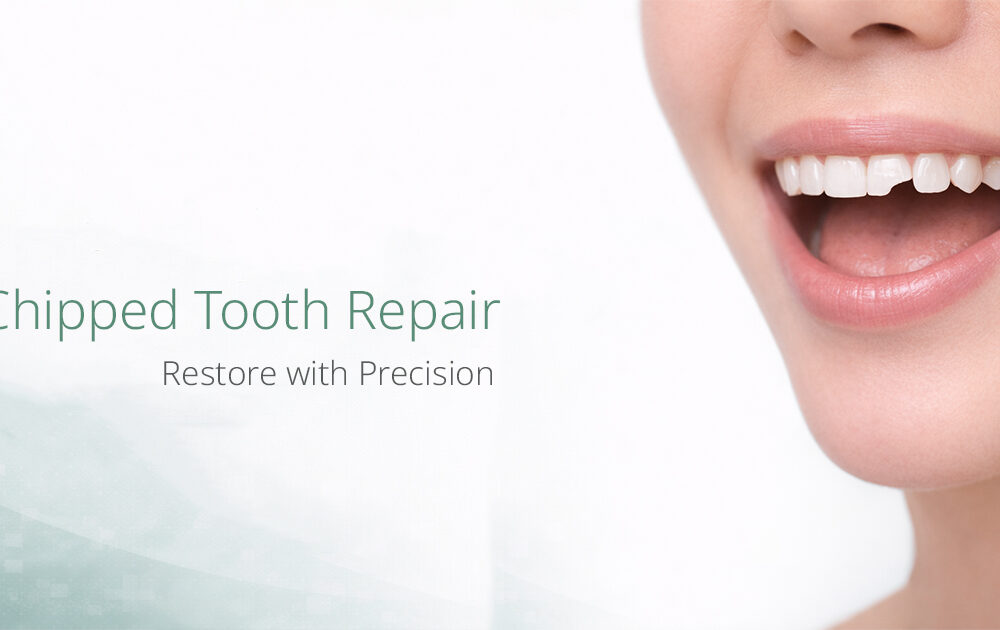
Although the tooth enamel is the hardest mineralized tissue in the body, its strength has limits. Accidental falling, receiving a blow to the face, or biting on something hard, especially when a tooth already has some cavity or large filling, it can cause a chipped or broken tooth. If you have broken tooth, go see your dentist as soon as possible for chipped tooth repair.
How to Care for a Chipped or Broken Tooth
Try the following self-care measures before seeing a dentist to fix a chipped tooth:
- the tooth is painful, take paracetamol or another pain reliever.
- If you must eat, eat soft foods and avoid biting down on the broken tooth.
Treatment for repairing a chipped tooth will depend on how severely it is damaged. If only a small piece of enamel broke off, the filling can normally be done in just one visit. A severely damaged or broken tooth may require more visits and expensive procedure. Here are some procedures your dentist may use to fix a chipped tooth.
Dental Fillings for Minor Chips
If you have chipped a small piece of tooth off, your dentist may restore it with a tooth-colour or metal-free filling.
Dental Crowns for Broken Teeth
If a large piece of tooth broke off or had large cavity, the dentist will remove all the decay and shape the tooth covering it with a crown, or custom tooth cap, made to protect the tooth and improve its appearance. Permanent crowns can be made from metal, metal-ceramic, all resin, or all ceramic. Getting a crown done usually takes two visits to the dental clinic. During the first visit, your dentist will take X-rays and thorough exam to check the roots and surrounding bone. If no further problems are detected, the dentist will numb the tooth and surrounding gum and then shape down the remaining tooth to make space for a crown. Then, your dentist will scan or use a putty-like material to make an impression of the prepared tooth as well as the opposing arch. The scan or impressions are sent to a lab for making a definitive crown. Temporary crown will be cemented on your tooth while the crown is being made. During the second visit, typically 3-7 days later, your dentist will remove the temporary crown and check the fit of the definitive crown before permanently cementing it. Our dental complex have special digital milling technology that enables us to make a one-day crown within couple hours.
Dental Veneers for Aesthetic Repair
If a front tooth is broken, a veneer can be an attractive option for chipped tooth repair. A veneer is a thin shell of tooth-colored porcelain or resin composite material that covers the front part of the tooth.
Root Canal Therapy for Deep Fractures
If a tooth chip is deep enough to expose the pulp, the center of the tooth containing nerves and blood vessels. Bacteria from the mouth can get inside and infect the pulp. Root canal treatment involves removing the dead pulp, cleaning the root canal, and then sealing it.Root canal treatment is performed by endodontists. In most cases, the remaining tooth must be covered with a crown to protect the weakened tooth.
With any questions on different methods of chipped tooth repair, or to schedule an appointment to fix a chipped tooth in Bangkok, contact Global Dental Complex today.
Chipped Tooth Repair: Treatment Options to Restore Your Smile
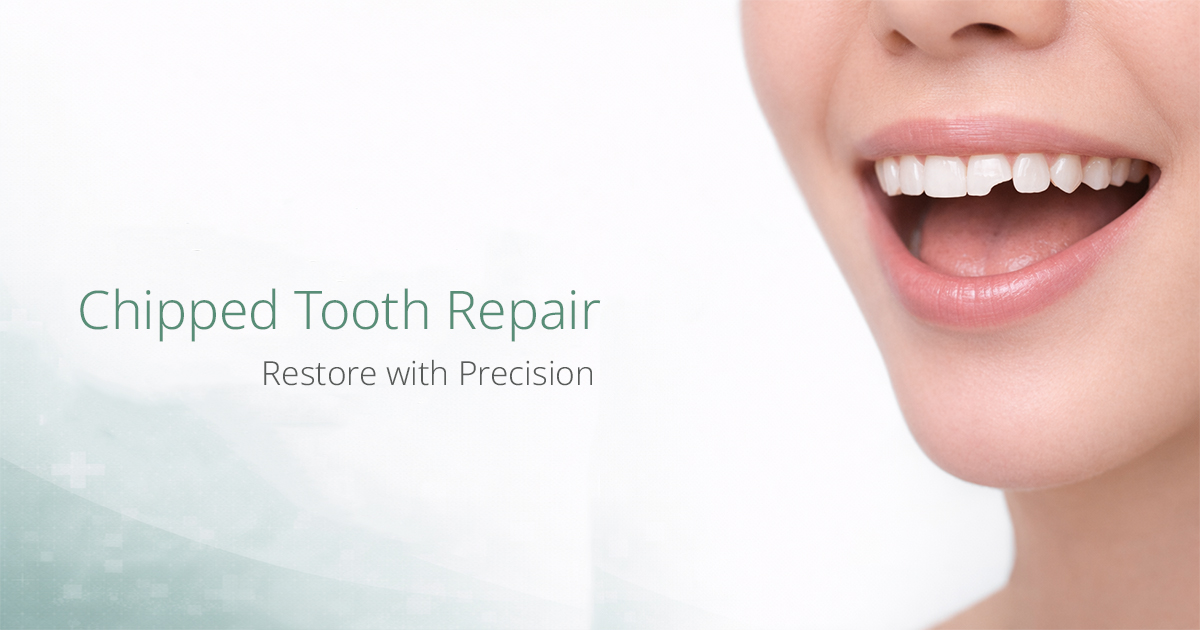
A chipped tooth can happen suddenly while eating, playing sports, grinding your teeth, or after an accident. Even a small chip can affect how your tooth looks and feels, especially if it is on a front tooth. In some cases, a chipped tooth may also cause sensitivity, sharp edges, pain, or a higher risk of further cracking. Chipped Tooth Repair helps restore the shape, comfort, strength, and appearance of the damaged tooth.
The right treatment depends on how much of the tooth is chipped, where the damage is located, whether the nerve is affected, and whether the tooth has any cracks extending deeper into the structure. Some minor chips can be repaired quickly with dental bonding, while larger fractures may need a veneer, crown, root canal treatment, or other restorative care.
If you have a chipped tooth, it is best to have it checked by a dentist. Even when the damage looks small, the dentist can examine whether the tooth structure is stable and recommend the most suitable Chipped Tooth Repair option for your case.
What Is Chipped Tooth Repair?
Chipped Tooth Repair refers to dental treatments used to restore a tooth that has broken, chipped, or lost part of its structure. The goal is to repair the damaged area, smooth sharp edges, protect the tooth from further damage, and improve the appearance of the smile.
A chipped tooth may involve only the outer enamel layer, or it may extend deeper into the dentin or even the pulp, where the nerve and blood vessels are located. The more severe the chip, the more important it is to receive proper diagnosis and treatment.
Common repair options include polishing, dental bonding, composite filling, porcelain veneer, dental crown, root canal treatment, or tooth extraction in severe cases. Your dentist will choose the treatment based on the location and severity of the chip.
Common Causes of a Chipped Tooth
Teeth are strong, but they can still chip under pressure or trauma. Some chips happen from a single accident, while others develop because the tooth has been weakened over time.
Common causes of chipped teeth include:
- Biting hard foods such as ice, nuts, bones, or hard candy
- Accidents or falls
- Sports injuries
- Teeth grinding or clenching
- Large old fillings that weaken tooth structure
- Tooth decay that makes the tooth fragile
- Using teeth to open packages or bite non-food objects
- Uneven bite pressure
- Previous dental trauma
Understanding the cause is important because repairing the chip alone may not prevent the problem from happening again. For example, if the tooth chipped because of grinding, a night guard may be recommended after Chipped Tooth Repair.
When Should You See a Dentist for a Chipped Tooth?
You should see a dentist as soon as possible if the chipped tooth causes pain, sensitivity, bleeding, swelling, or a sharp edge that cuts your tongue or cheek. You should also seek dental care if the chip is large, if the tooth changes color, or if you feel pain when biting.
Signs that a chipped tooth needs professional attention include:
- Pain when chewing or biting
- Sensitivity to cold, heat, or sweet foods
- A sharp or rough edge
- A visible crack line
- Bleeding around the tooth
- Swelling near the gum
- A large missing piece of tooth
- A front tooth chip that affects your smile
- A chipped tooth with an old filling or crown
If the chip is small and painless, it may not be an emergency, but it should still be checked. A minor chip can sometimes become larger if left untreated.
Types of Chipped Tooth Damage
1. Minor Enamel Chip
A minor enamel chip affects only the outer layer of the tooth. It may not cause pain, but it can create a rough edge or affect the appearance of the smile. This type of chip may be treated with polishing, smoothing, or simple bonding.
2. Moderate Chip Exposing Dentin
When the chip reaches the dentin layer, the tooth may become sensitive. Dentin is softer than enamel and can be more vulnerable to decay or irritation. Chipped Tooth Repair for this type of damage may involve composite bonding, filling, veneer, or crown depending on the size and location.
3. Large Fracture Near the Nerve
If a large part of the tooth breaks off, the nerve may be irritated or exposed. This can cause significant pain or sensitivity. Root canal treatment may be needed before restoring the tooth with a crown or other restoration.
4. Chipped Tooth with Crack Extension
Sometimes a chip is part of a deeper crack. A crack may extend into the root or under the gumline. This type of damage needs careful evaluation because the treatment may be more complex than simple bonding.
Chipped Tooth Repair Options
Dental Polishing or Smoothing
For very small chips, the dentist may simply smooth and polish the rough edge. This can make the tooth feel more comfortable and reduce irritation to the tongue or cheek. Polishing is usually suitable only when the damage is minimal and does not affect tooth strength.
Dental Bonding
Dental bonding is one of the most common Chipped Tooth Repair options for small to moderate chips, especially on front teeth. The dentist applies tooth-colored composite resin to rebuild the missing part of the tooth, shapes it, and hardens it with a special light.
Bonding is conservative, relatively quick, and can improve the appearance of the tooth in a single visit. However, composite bonding may stain or chip over time and may need maintenance or replacement.
Composite Filling
If the chipped area is on a back tooth or involves a cavity, a composite filling may be used to repair the damaged structure. The filling restores the missing portion of the tooth and helps protect it from further decay or fracture.
Porcelain Veneer
A porcelain veneer may be recommended for a chipped front tooth when appearance is a major concern. A veneer is a thin porcelain layer bonded to the front surface of the tooth. It can improve the shape, color, size, and symmetry of the tooth.
Veneers are often suitable for visible front teeth with cosmetic damage, but they may not be appropriate if the tooth has severe structural weakness or heavy bite pressure.
Dental Crown
If a large part of the tooth is chipped or weakened, a dental crown may be recommended. A crown covers the tooth and helps protect it from further fracture. Crowns are commonly used when there is significant tooth loss, a large filling, root canal treatment, or a high risk of cracking.
Root Canal Treatment
If the chip exposes or damages the pulp, root canal treatment may be needed. This treatment removes infected or inflamed pulp tissue from inside the tooth. After root canal treatment, the tooth is usually restored with a crown to protect it.
Tooth Extraction
In severe cases, a chipped tooth may not be restorable, especially if the fracture extends deep below the gumline or into the root. If the tooth cannot be saved, extraction may be recommended, followed by replacement options such as a dental implant, bridge, or denture.
Chipped Front Tooth Repair
A chipped front tooth can be especially noticeable because it affects the smile directly. For small front tooth chips, dental bonding is often a simple and effective option. The dentist can match the resin color to your natural tooth and shape it to blend with the surrounding teeth.
For larger chips or cases where the tooth color, shape, or alignment also needs improvement, porcelain veneers or crowns may be considered. The best Chipped Tooth Repair option depends on the amount of remaining tooth structure, bite pressure, aesthetic goals, and long-term durability.
Chipped Back Tooth Repair
Back teeth are used for chewing, so strength is especially important. A small chip on a molar may be repaired with smoothing or a filling, but larger chips often need a crown to protect the tooth from further fracture.
If the chipped back tooth has an old large filling, there may be less natural tooth structure remaining. In that case, your dentist may recommend a stronger restoration instead of a simple filling. If pain or nerve involvement is present, root canal treatment may also be needed.
What to Do Immediately After Chipping a Tooth
If you chip a tooth, try to stay calm and protect the tooth until you can see a dentist. The right steps can reduce discomfort and prevent additional damage.
- Rinse your mouth gently with warm water
- Save any broken tooth fragment if possible
- Avoid chewing on the damaged tooth
- Cover a sharp edge with dental wax if it irritates your mouth
- Use a cold compress if there is swelling
- Take pain relief medication only as directed
- Schedule a dental appointment as soon as possible
Do not use household glue or attempt to repair the tooth yourself. A professional evaluation is necessary to make sure the tooth is safe, clean, and properly restored.
Is Chipped Tooth Repair Painful?
Most Chipped Tooth Repair procedures are comfortable, especially for small chips that only affect the enamel. If the tooth is sensitive or the damage is deeper, local anesthesia may be used to keep the area numb during treatment.
If the nerve is affected, the tooth may already be painful before treatment. In that case, root canal treatment or additional care may be needed to relieve pain and restore the tooth properly.
How Long Does Chipped Tooth Repair Last?
The lifespan of Chipped Tooth Repair depends on the treatment type, tooth location, bite force, oral hygiene, and daily habits. Polishing may be permanent for a very small chip, while bonding may need repair or replacement over time. Veneers and crowns generally last longer but still require proper care.
Factors that can affect durability include grinding, biting hard objects, using teeth as tools, poor oral hygiene, untreated cavities, and uneven bite pressure. Your dentist may recommend a night guard if grinding or clenching contributed to the chip.
How to Prevent a Tooth from Chipping Again
After repairing a chipped tooth, preventing future damage is important. Some chips are accidental and cannot be predicted, but many risks can be reduced with good habits.
- Avoid chewing ice, bones, hard candy, or very hard foods
- Do not use your teeth to open packages or bite objects
- Wear a mouthguard when playing contact sports
- Use a night guard if you grind or clench your teeth
- Treat cavities and old damaged fillings early
- Maintain regular dental checkups
- Brush and floss daily to keep teeth strong
Chipped Tooth Repair vs. Veneers
Dental bonding and veneers are both common options for repairing chipped front teeth, but they are different. Bonding uses composite resin and is often faster and more conservative. Veneers use porcelain and may provide better stain resistance and a more refined cosmetic result in selected cases.
Bonding may be suitable for small chips, while veneers may be recommended when the tooth needs a broader cosmetic improvement. Your dentist will explain which option is more appropriate based on your tooth structure and smile goals.
Chipped Tooth Repair vs. Crown
A crown is usually recommended when the tooth is more heavily damaged. While bonding repairs only the missing area, a crown covers the entire visible part of the tooth to protect it. This may be important if the tooth is weak, cracked, heavily filled, or treated with root canal therapy.
For small chips, a crown may be unnecessary. For large chips, a simple filling or bonding may not provide enough strength. The right choice depends on the amount of remaining tooth structure.
Can a Chipped Tooth Heal on Its Own?
No. A chipped tooth cannot grow back or repair itself naturally. Small chips may not cause symptoms, but the missing tooth structure will not regenerate. If the chip creates a sharp edge, exposes dentin, or weakens the tooth, dental treatment is needed.
Leaving a chipped tooth untreated may increase the risk of sensitivity, decay, further fracture, or pain, especially if the damage is deeper than it appears.
Questions to Ask Your Dentist
Before choosing a Chipped Tooth Repair treatment, you may want to ask:
- How severe is the chip?
- Is the nerve affected?
- Is there a deeper crack in the tooth?
- Can the tooth be repaired with bonding?
- Do I need a veneer, crown, or root canal?
- How long will the repair last?
- What should I avoid after treatment?
- Do I need a night guard or mouthguard?
Conclusion: Repairing a Chipped Tooth Early Helps Protect Your Smile
A chipped tooth may seem like a small problem, but it can affect comfort, appearance, and long-term tooth health. Chipped Tooth Repair can restore the missing tooth structure, smooth sharp edges, reduce sensitivity, and protect the tooth from further damage.
The best treatment depends on the size of the chip, the tooth location, the condition of the nerve, and the strength of the remaining tooth. Whether you need simple bonding, a filling, a veneer, a crown, or more advanced treatment, seeing a dentist early gives you the best chance of saving and protecting the tooth.
Frequently Asked Questions About Chipped Tooth Repair
Can a chipped tooth be repaired in one visit?
Many small to moderate chips can be repaired in one visit with dental bonding or composite filling. Larger chips may require a crown, veneer, root canal treatment, or multiple appointments.
Is a chipped tooth a dental emergency?
A chipped tooth can be urgent if there is pain, bleeding, swelling, nerve exposure, or a large missing piece. A small painless chip may not be an emergency, but it should still be examined by a dentist.
What is the best treatment for a chipped front tooth?
The best treatment depends on the size and location of the chip. Small front tooth chips are often repaired with bonding, while larger or more cosmetic cases may need a veneer or crown.
Will dental bonding look natural?
Dental bonding can look natural when the composite resin is matched and shaped properly. However, bonding may stain or wear over time and may need maintenance.
Can a chipped tooth cause sensitivity?
Yes. If the chip exposes dentin or irritates the nerve, the tooth may become sensitive to cold, heat, sweet foods, or brushing.
What happens if I ignore a chipped tooth?
Ignoring a chipped tooth may lead to further fracture, sensitivity, decay, pain, or infection depending on the depth of the damage. A dental examination helps determine the risk.
How can I prevent another chipped tooth?
Avoid biting hard objects, wear a sports mouthguard if needed, use a night guard if you grind your teeth, and maintain regular dental checkups to detect weak teeth or old fillings early.