









Plan Your Visit
Global Dental Complex · Nonthaburi
Plan Your Visit
Practical information for patients travelling to our clinic in Nonthaburi, near Bangkok.
How to get here from the airports and by MRT, where to park and stay, and what to arrange before your first appointment and after you return home.
Getting here
Where we are and how to get here
Global Dental Complex is at 219 Rattanathibet Road, Nonthaburi 11000, Thailand, in front of MRT Bang Krasor station. Opening hours are 9.00–20.00 daily.

-
By MRT
Take the MRT Purple Line to Bang Krasor station and use Exit 1; the clinic is close to the exit. From central Bangkok, ride the MRT Blue Line to Tao Poon and change to the Purple Line towards Khlong Bang Phai.
-
By car or taxi
The clinic is on Rattanathibet Road, between Soi Rattanathibet 13 and 15, across from Grand Richmond Stylish Convention Hotel.
If you plan to drive, parking is available at the clinic. Ask about current arrangements before your visit.
-
From the airport
Arriving at Suvarnabhumi (BKK) or Don Mueang (DMK)? Check live directions to the clinic on Google Maps, then ask Global Dental Complex if you need help choosing a route with your luggage or appointment time.
-
Staying nearby

If your treatment plan involves appointments on consecutive days, a nearby stay may be convenient. Grand Richmond Stylish Convention Hotel is across from the clinic, near MRT Bang Krasor.
Confirm your appointment schedule with Global Dental Complex before booking. Ask the clinic whether a patient room rate is currently available and how to arrange it.

Before you travel
What to arrange before your trip
- Book your first appointment
- Message us on WhatsApp or Messenger, call, or use the online booking form. Include your planned travel dates.
- Ask how to share your records
- If you have recent dental X-rays, scans or a list of medicines, ask how they can be shared securely before you travel.
- Allow time for more than one visit
- Some treatments are completed over several appointments. Ask which stages need you at the clinic once your plan is known.
- Bring what you have
- Bring any dental records and the medicines you take to your first appointment.
After you return home
Follow-up from abroad
- Take your treatment records
- Ask which records to take home so a local dentist can see what was done.
- Agree how to reach us
- Before you leave, agree how to contact the clinic from abroad and when to see a local dentist instead.
Treatments
Plan your visits around treatment
- One or several missing teeth
Dental Implants
Treatment stages, cost factors and visit planning.
View treatment - One whole jaw
All-on-4 Full Mouth Implants
A fixed bridge for most or all teeth in one jaw.
View treatment - Full-arch options
Full Mouth Dental Implants
Full-arch implant restoration when many or all teeth are missing.
View treatment

Book a consultation
Questions before you book?
Message us with your planned travel dates, the treatment you are considering and any questions about getting here or staying nearby.
Prefer a form? Book online or see the contact page.
Confirm travel arrangements and appointment dates with the clinic before you book your trip.
Dental Implant preview
Global Dental Complex · Nonthaburi
Dental Implants in Nonthaburi, near Bangkok
A dental implant can support a crown for one missing tooth or a bridge when several teeth need replacing.
Before travelling to Thailand, it helps to know whether the site needs preparation, when a temporary or final tooth may be fitted, and how follow-up would work after you return home. An examination is needed before GDC can confirm the treatment stages, visits and total cost for your case.
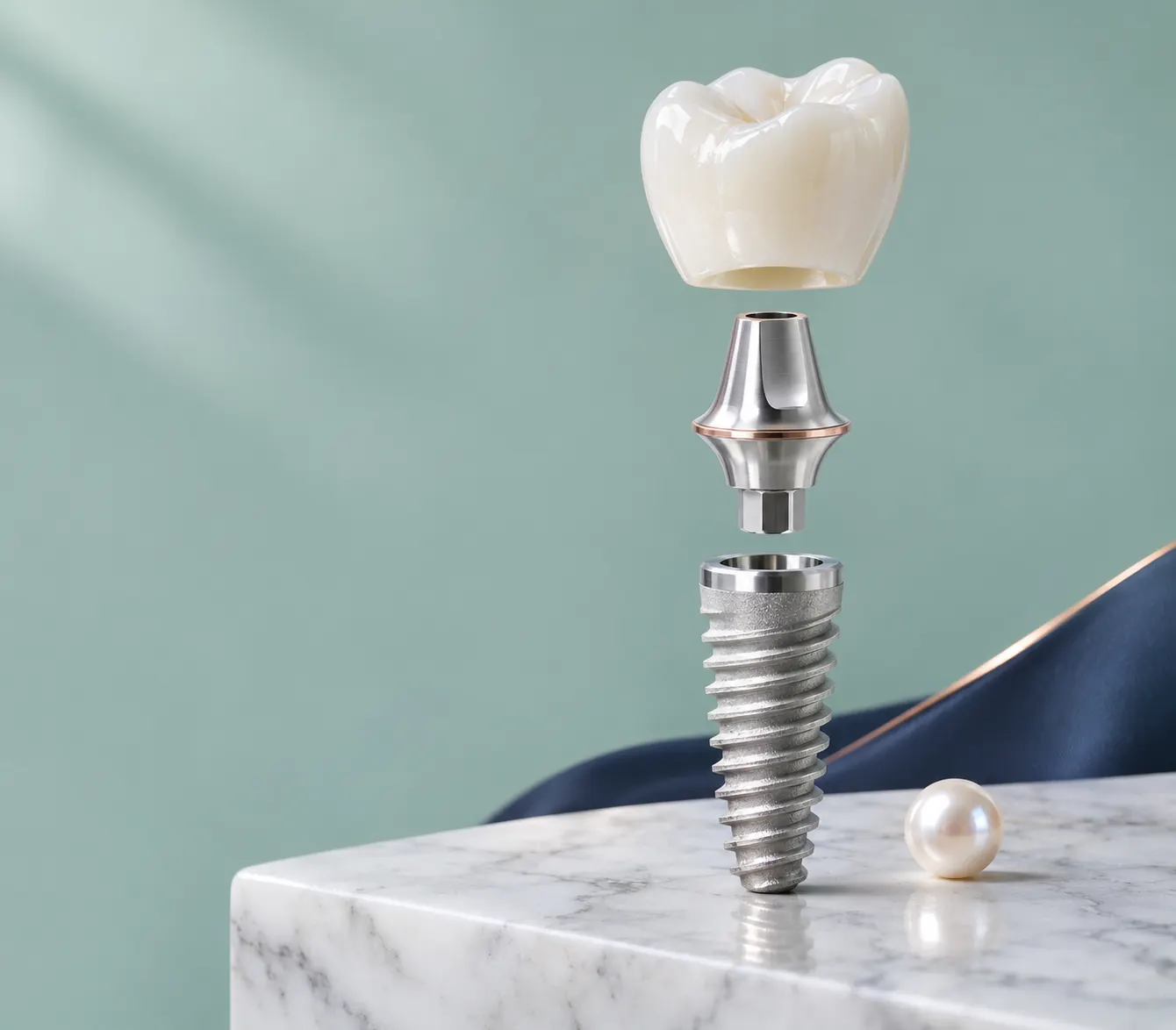

- Crown or bridge the visible tooth you chew with
- Abutment connects the crown to the implant
- Implant fixture sits in the jawbone in place of the root
Overview
What a dental implant replaces
An implant replaces the root of a missing tooth. The fixture is placed in the jawbone, an abutment connects it to the tooth above the gum, and a crown or bridge is fitted on top. Because the new tooth has its own support, the neighbouring teeth are not used as anchors, as they are for a conventional bridge.

-

One missing tooth
One implant supports one crown. For a front tooth, gum shape and colour matching need particular care; for a back tooth, the plan has to account for chewing force.
Front-tooth implants -
Several missing teeth
Implants can support a bridge, or help hold a removable partial denture more firmly. How many implants are needed depends on where the gaps are, the bone available and the bite.
-
Most or all teeth in one jaw
A full-arch plan sets the implant positions, tooth shape and bite for the whole jaw together. It is a different treatment with its own pages.
All-on-4 implants Full mouth implants


Assessment
How your implant plan is decided
The first examination settles three things: whether the site is ready for an implant, what kind of tooth will go on it, and how many stages treatment will need. These are the findings that change the plan.
What the dentist assesses
- Bone Its height and width, and the distance to nerves or the sinus, decide whether an implant can be placed straight away or the site needs grafting first. X-rays, and 3D imaging where needed, show this.
- Gums and remaining teeth Gum disease or decay elsewhere is treated before implant surgery.
- Bite The opposing teeth and biting force affect the number of implants and the type of crown or bridge.
- General health Medical conditions, medicines and smoking can affect healing after surgery.
Treatment stages
From assessment to follow-up
Implant treatment is usually spread over several appointments. The longest wait is normally after placement, while the bone bonds with the implant.
The usual sequence
- Assessment and planning — examination, imaging and a plan for your case
- Site preparation — for example removing a failing tooth, treating gums or grafting boneif needed
- Implant placement — under local anaesthetic, then a wound check
- Healing — the bone bonds with the implant; a temporary tooth may be fitted where suitable
- Final crown or bridge — made from a scan or impression and adjusted to your bite
- Follow-up — check-ups and professional cleaning around the implant
Terms worth asking about
- Immediate placement The implant is placed at the same visit as the extraction. Whether this is possible depends on infection, the bone around the socket and how firmly the implant sits.
- Immediate loading A tooth is attached soon after placement. When this is possible it is a temporary tooth; the final crown follows after healing.
- Temporary tooth Fills the gap while you heal, mainly for appearance. It is not made for full chewing force.
- Final crown or bridge Made after the implant has bonded with the bone, and shaped and coloured to match your other teeth.

Cost
What affects the cost of dental implants
The total depends on how many implants you need, whether the site needs an extraction or graft first, and the type of crown or bridge. GDC confirms the total for your case after an examination.
Implant prices quoted online by clinics in Bangkok and elsewhere in Thailand are hard to compare. Some cover only the implant fixture; others include the abutment and crown. When comparing the cost of one implant in Thailand, check whether each figure includes the final crown.
Questions to ask about your estimate
- Does it include the abutment, the final crown or bridge, and follow-up visits?
- If an extraction or bone graft is needed, how is it listed?
- If the plan changes during treatment, which items could change?
If you have recent X-rays or health records, ask the clinic how they can be shared securely before you travel.
Items an estimate may list separately
- Examination and imaging (X-rays or 3D scan)
- Extractionif needed
- Bone or soft-tissue graftif needed
- Implant fixture, with its system or brand
- Abutment
- Temporary toothif used
- Final crown or bridge, with its material
- Follow-up visits
Travelling for treatment
Planning a visit from abroad
Implant treatment usually has more than one stage, and the healing time between them varies. These are the questions to settle with the clinic before you book flights.
Global Dental Complex is at 219 Rattanathibet Road in Nonthaburi, near MRT Bangkrasor (Purple Line, Exit 1). If you are staying in Bangkok, allow time to travel to the clinic for each appointment.
- Where will the first assessment happen?
- Your plan, number of visits and total cost are confirmed after an examination with imaging, so ask how that first appointment is arranged.
- Can you share records before you travel?
- If you have recent X-rays, scans or a list of medicines, ask how they can be shared securely before your trip, and what the dentist can and cannot judge from them before seeing you.
- Which stages need you at the clinic?
- Implant placement and fitting the final crown or bridge are done in the clinic. Ask which other appointments must be in person.
- How long is the healing interval, and will you need a second trip?
- The bone needs time to bond with the implant before the final tooth is made, so placement and the final tooth are often separate visits. Ask for an estimate once your plan is known.
- When is it safe to fly?
- Ask the dentist after surgery, especially if bone grafting or work near the sinus was involved.
- Who helps if something feels wrong at home?
- Agree before treatment how to contact GDC from abroad, and when you should see a local dentist instead.

Our team
Implant dentists at GDC
Asst. Prof. Pakawat Chatriyanuyoke is a dental implantologist and prosthodontist. His qualifications include Diplomate of the American Board of Prosthodontics (2011) and of the American Board of Oral Implantology (2014).
Dr. Kan Wongkamhaeng is a prosthodontist whose work at GDC covers dental implants, crowns and dentures. View Dr. Kan's profile.
Both profiles list each dentist's clinic days, which can help when you plan appointment dates.
See all implant dentistsFAQ
Questions about implant treatment
Can one missing tooth be replaced with an implant?
Yes, if the bone and gum at that site are suitable. One implant normally carries one crown, and the neighbouring teeth are not used as supports.
When might bone grafting be needed?
When the bone is too thin or too low to hold an implant, often after a tooth has been missing for some time or after an infection. A small graft can sometimes be done at placement; a larger one may need to heal first.
Can extraction and implant placement happen at one visit?
Sometimes. It depends on whether the tooth is infected and whether enough bone remains around the socket to hold the implant firmly. Otherwise the extraction site heals first.
Is a temporary tooth possible on the same day?
In some cases, when the implant is stable enough at placement and the bite allows it. A same-day tooth is a temporary one; the final crown is made after healing.
What affects the total cost?
The number of implants, any extraction or grafting, imaging, whether a temporary tooth is used, and the material of the final crown or bridge. GDC confirms the total after an examination.
How many trips might treatment require?
That depends on the stages in your plan. Placement and the final crown are normally separated by a healing interval, so plans often involve more than one visit. Ask for your likely schedule once you have been assessed.
Can treatment be finished in one trip?
Not usually for a final implant crown, because the bone needs time to bond with the implant first. Whether any part of your plan could be shortened can only be judged after an examination.
When can I fly after implant surgery?
Ask your dentist before booking a return flight. The advice depends on the surgery, particularly if a bone graft or a procedure near the sinus was involved.
What follow-up will I need at home?
Daily cleaning around the implant, regular check-ups and professional cleaning. Ask which treatment records to take home so that a local dentist can see what was done.
Who should I contact if I have a problem after returning home?
Agree before treatment how to reach GDC from abroad. For pain, swelling or a loose tooth, see a dentist promptly rather than waiting for your next visit.
Book a consultation
Planning a visit from abroad?
Ask which treatment stages would need to happen at the clinic in Nonthaburi, near Bangkok. If you have recent dental X-rays or a list of your medicines, ask how to share them securely before you travel.
This page gives general information and is not a diagnosis. Your treatment plan, number of visits and total cost are confirmed after an examination.
Test 2
Dental Implant
รากฟันเทียม
ทางเลือกทดแทนฟันที่ถูกถอนหรือหลุดไป โดยฝังรากเทียมในกระดูกขากรรไกรเพื่อเป็นฐานรองรับฟันซี่ใหม่
แม้สูญเสียฟันในตำแหน่งเดียวกัน แผนการรักษาของแต่ละบุคคลก็อาจแตกต่างกัน ตามปริมาณกระดูกที่เหลืออยู่และแรงสบฟัน หน้านี้รวบรวมทางเลือกในการรักษา ขั้นตอน ค่าใช้จ่ายที่มักแยกเป็นรายการ และสิ่งที่ควรสอบถามก่อนเริ่มการรักษา
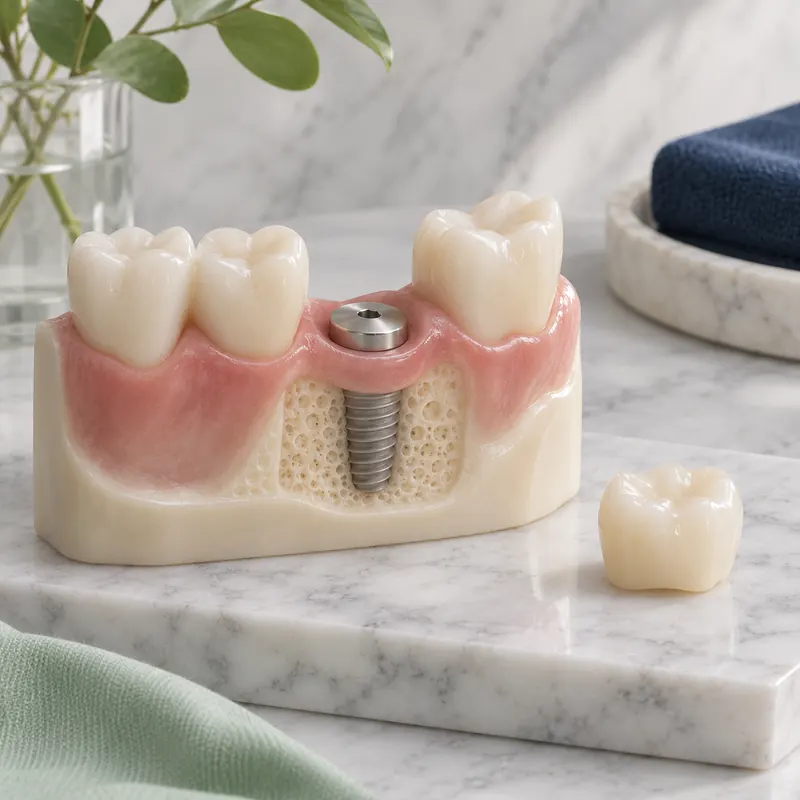
- ครอบฟัน ส่วนที่มองเห็นและใช้เคี้ยว
- หลักยึด Abutment เชื่อมครอบฟันกับราก
- รากเทียม Fixture ฝังในกระดูกแทนรากเดิม
Overview
รากฟันเทียมคืออะไร
รากฟันเทียมประกอบด้วยสามส่วน ได้แก่ รากเทียมที่ฝังในกระดูกแทนรากฟันเดิม หลักยึดที่ต่อขึ้นมาเหนือเหงือก และครอบฟันซึ่งเป็นส่วนที่มองเห็นและใช้บดเคี้ยว เนื่องจากฟันซี่ใหม่มีรากเทียมรองรับ จึงไม่ต้องอาศัยฟันข้างเคียงเป็นหลักยึดเหมือนสะพานฟัน
นอกจากครอบฟันซี่เดียว รากเทียมยังใช้รองรับสะพานฟัน หรือช่วยยึดฟันปลอมชนิดถอดได้ให้มั่นคงขึ้น
ปัจจัยที่ทำให้แผนการรักษาแตกต่างกัน
- กระดูกขากรรไกร ความหนาและความสูงของกระดูก รวมถึงระยะห่างจากเส้นประสาทหรือโพรงไซนัส เป็นตัวกำหนดว่าฝังรากได้ทันที หรือต้องปลูกกระดูกก่อน
- เหงือกและฟันที่เหลือ หากมีโรคเหงือกหรือฟันผุ ต้องรักษาให้เรียบร้อยก่อนเริ่มฝังราก
- การสบฟัน ฟันคู่สบและแรงกัดมีผลต่อจำนวนราก และรูปแบบฟันที่จะใส่บนราก
- สุขภาพโดยรวม โรคประจำตัว ยาที่ใช้ และการสูบบุหรี่ มีผลต่อการหายของแผลหลังผ่าตัด

-
เสียฟัน 1 ซี่
ใช้รากเทียมหนึ่งตัวรองรับครอบฟันหนึ่งซี่ โดยไม่ต้องกรอฟันข้างเคียง สำหรับฟันหน้าต้องคำนึงถึงรูปเหงือกและสีฟันให้กลมกลืน ส่วนฟันกรามต้องประเมินแรงบดเคี้ยวเป็นสำคัญ
รากฟันเทียมฟันหน้า -
เสียฟันหลายซี่
อาจใช้รากเทียมรองรับสะพานฟันหลายซี่ โดยจำนวนรากขึ้นอยู่กับตำแหน่ง ปริมาณกระดูก และแรงสบ หรือใช้รากเทียมช่วยยึดฟันปลอมชนิดถอดได้บางส่วน
ครอบฟันและสะพานฟัน -
เหลือฟันเพียงไม่กี่ซี่ หรือไม่เหลือฟันในขากรรไกรนั้น
ทันตแพทย์จะวางแผนตำแหน่งราก รูปฟัน และการสบฟันทั้งชุดไปพร้อมกัน แทนการทดแทนทีละซี่
รากฟันเทียมทั้งปาก All-on-4
รากฟันเทียม สะพานฟัน และฟันปลอมถอดได้ ต่างกันอย่างไร
| เทียบเรื่อง | รากฟันเทียม | สะพานฟัน | ฟันปลอมถอดได้ |
|---|---|---|---|
| ส่วนที่ยึดฟันใหม่ | รากเทียมที่ฝังในกระดูก | ฟันข้างเคียงช่องว่าง ซึ่งครอบเป็นหลักยึด | ฐานที่วางบนเหงือก และตะขอที่เกี่ยวกับฟันที่เหลือ |
| การกรอฟันข้างเคียง | ไม่ต้องกรอ | ต้องกรอฟันหลักยึดเพื่อครอบ | อาจกรอเล็กน้อยบริเวณที่วางตะขอ |
| การผ่าตัด | จำเป็น | ไม่จำเป็น | ไม่จำเป็น |
| ระยะเวลาจนได้ฟันชุดสุดท้าย | นานกว่า เนื่องจากต้องรอให้กระดูกยึดกับราก | มักสั้นกว่า | มักสั้นกว่า |
| การทำความสะอาด | แปรงฟันและทำความสะอาดรอบรากเทียมทุกวัน | ต้องทำความสะอาดใต้ตัวสะพาน | ถอดออกมาทำความสะอาดทุกวัน |
ในบางกรณี สะพานฟันหรือฟันปลอมอาจเหมาะสมกว่า เช่น ฟันข้างเคียงจำเป็นต้องครอบอยู่แล้ว หรือผู้ป่วยยังไม่พร้อมรับการผ่าตัด · ดูบริการฟันปลอม
Treatment process
ขั้นตอนการทำรากฟันเทียม
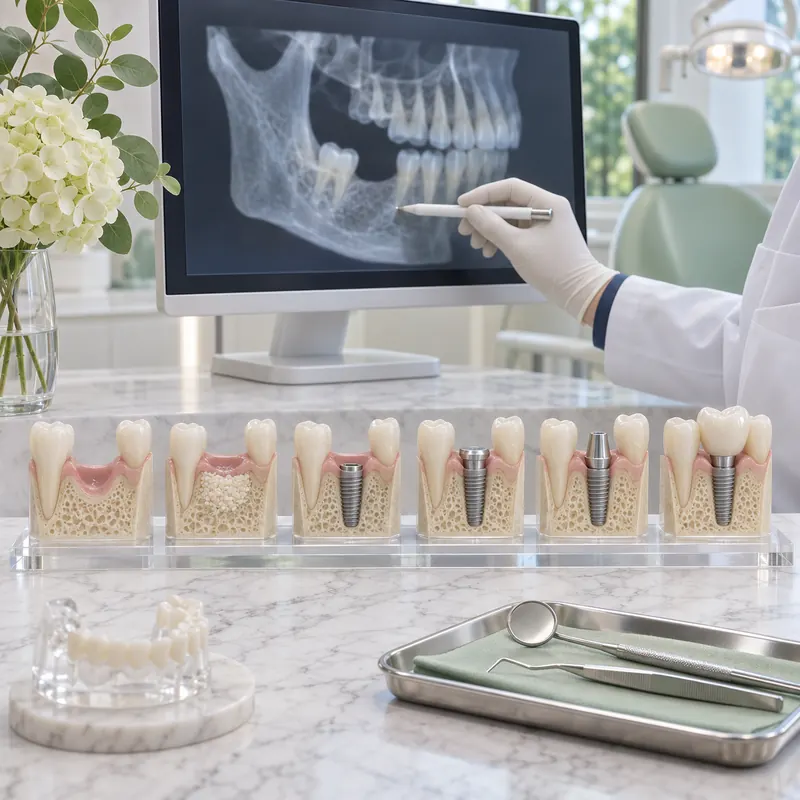
การรักษามักแบ่งเป็นหลายนัด ช่วงที่ใช้เวลานานที่สุดคือหลังฝังราก ซึ่งต้องรอให้กระดูกยึดกับรากเทียม

ตรวจและวางแผน
ซักประวัติ ตรวจช่องปาก และถ่ายภาพรังสี หลังนัดนี้จะทราบว่าต้องใช้รากกี่ตัว ต้องเตรียมบริเวณที่จะฝังรากหรือไม่ และค่าใช้จ่ายจะแยกเป็นอะไรบ้าง
เตรียมบริเวณที่จะฝังราก
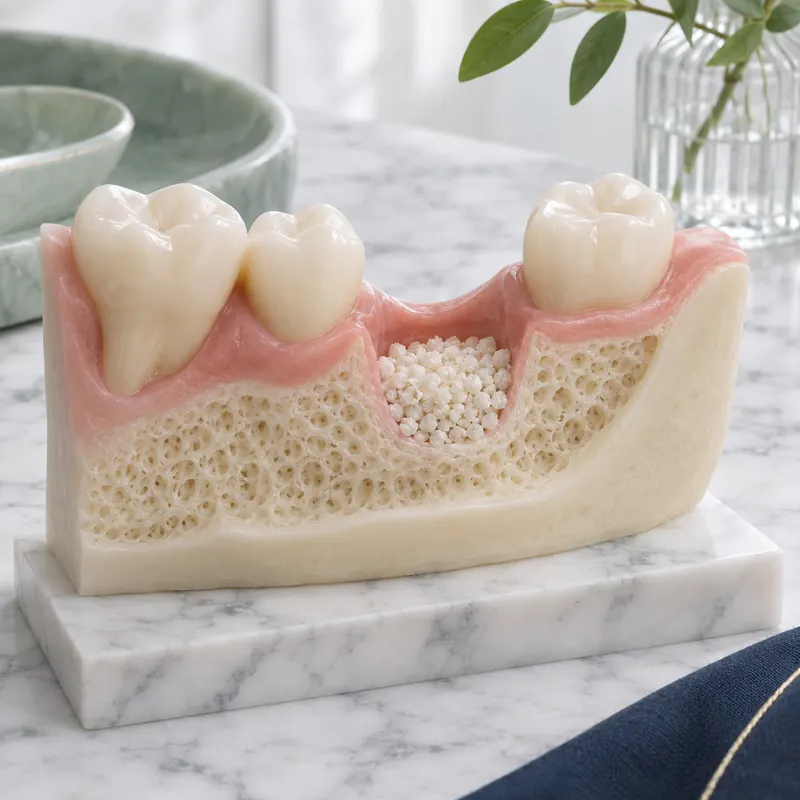
จำเป็นเฉพาะบางราย เช่น ถอนฟันที่ไม่สามารถเก็บไว้ได้ รักษาโรคเหงือก หรือปลูกกระดูกเมื่อกระดูกบางเกินไป
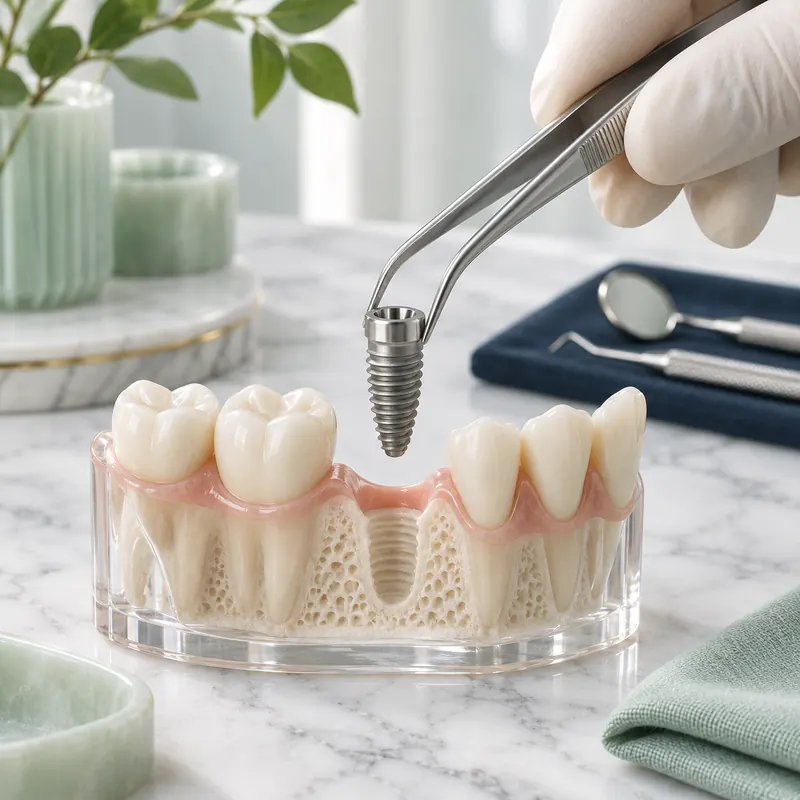
ฝังรากเทียม
ฝังรากเทียมลงในกระดูกภายใต้ยาชาเฉพาะที่ และนัดติดตามดูแผล
รอกระดูกยึดราก
บางรายอาจใส่ฟันชั่วคราวระหว่างรอ โดยทันตแพทย์จะแนะนำข้อจำกัดในการใช้งานตามแผนรักษา
ใส่ฟันชุดสุดท้าย
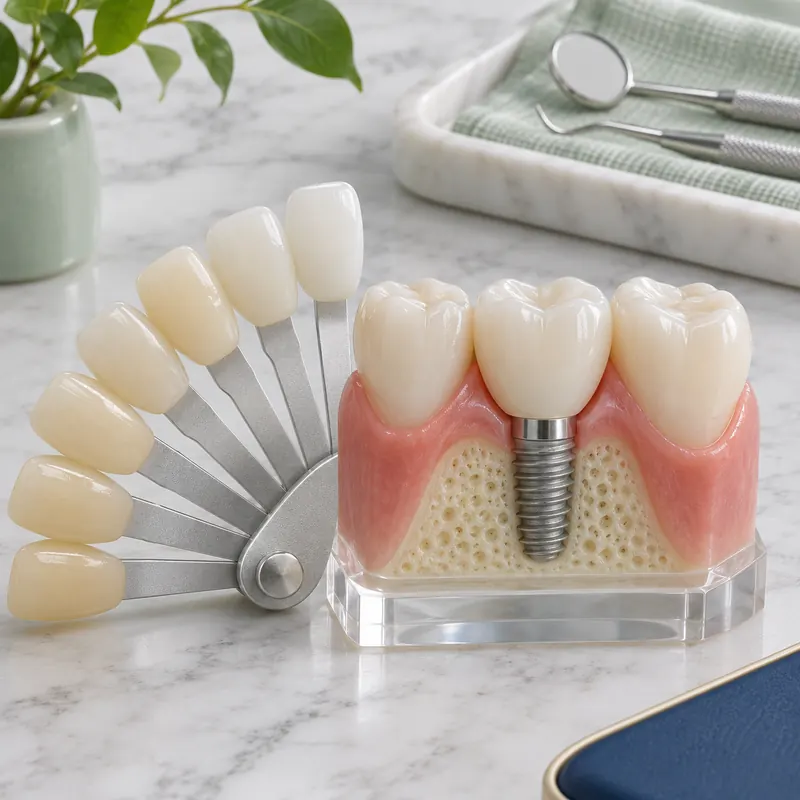
สแกนหรือพิมพ์ตำแหน่งรากเทียม จัดทำครอบฟันให้กลมกลืนกับสีและรูปฟันข้างเคียง แล้วปรับการสบฟันให้เหมาะสม
ดูแลระยะยาว
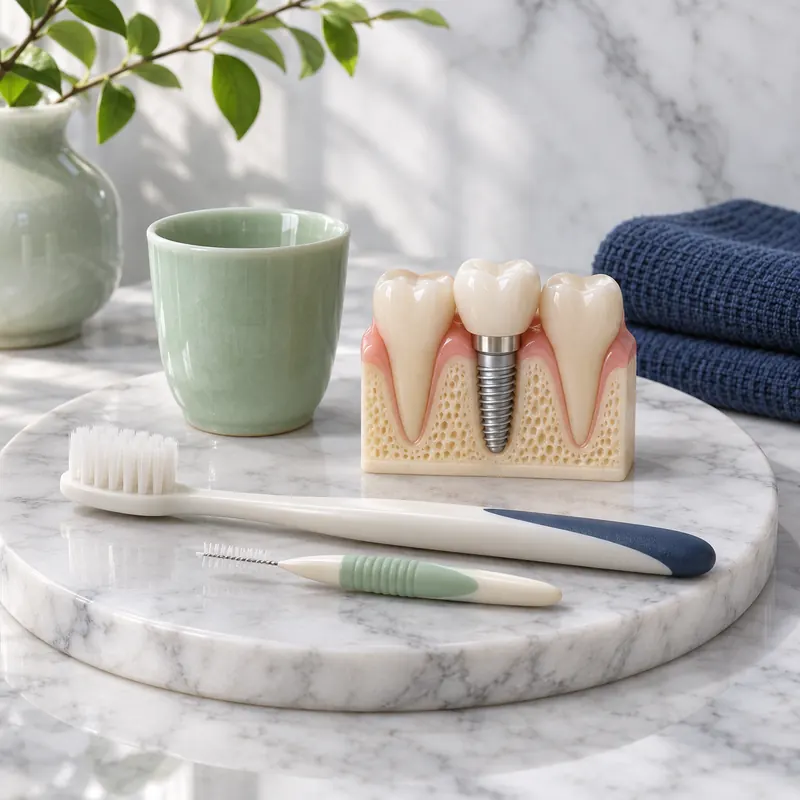
ทำความสะอาดรอบรากเทียมทุกวันและเข้ารับการตรวจตามนัด เนื่องจากเหงือกรอบรากเทียมเกิดการอักเสบได้เช่นเดียวกับเหงือกรอบฟันธรรมชาติ
Cost
ค่าใช้จ่ายรากฟันเทียมขึ้นอยู่กับอะไร
ราคารากฟันเทียมจากแต่ละแหล่งมักเปรียบเทียบกันโดยตรงไม่ได้ บางราคาเป็นค่ารากเทียมเพียงอย่างเดียว บางราคารวมหลักยึดและครอบฟันแล้ว การเปรียบเทียบค่าใช้จ่ายสำหรับฟัน 1 ซี่ จึงควรตรวจสอบก่อนว่าราคานั้นรวมครอบฟันแล้วหรือไม่
สิ่งที่ควรสอบถามเรื่องค่าใช้จ่าย
- ค่าใช้จ่ายที่แจ้งรวมหลักยึด ครอบฟัน และการนัดติดตามผลแล้วหรือไม่
- หากต้องถอนฟันหรือปลูกกระดูก มีค่าใช้จ่ายแยกอย่างไร
- หากแผนการรักษาเปลี่ยนระหว่างทาง ค่าใช้จ่ายส่วนใดอาจเปลี่ยนแปลง
แต่ละแผนอาจมีรายการแตกต่างกัน ค่าใช้จ่ายที่แน่ชัดจะทราบหลังการตรวจและวางแผนการรักษา หากต้องการทราบรายการเบื้องต้นของแต่ละแผน สามารถสอบถามทีมงานได้
ไม่จำเป็นต้องส่งภาพเอกซเรย์หรือข้อมูลสุขภาพทางแชต สามารถนำมาปรึกษาทันตแพทย์ในวันตรวจได้
ค่าใช้จ่ายมักแยกเป็นรายการเหล่านี้
- การตรวจและภาพถ่ายรังสี / ภาพสามมิติ
- การถอนฟันหากมี
- การปลูกกระดูกหรือเสริมเนื้อเยื่อหากมี
- รากเทียม พร้อมระบบหรือยี่ห้อ
- หลักยึด (Abutment)
- ฟันชั่วคราวหากมี
- ครอบฟันชุดสุดท้าย พร้อมวัสดุ
- นัดติดตามผลหลังใส่ฟัน
Further reading
อ่านต่อเรื่องรากฟันเทียม
-
ค่าใช้จ่าย
ราคารากฟันเทียมต่างกันเพราะอะไร
ระบบรากเทียม วัสดุครอบฟัน และการเตรียมบริเวณที่จะฝังราก ทำให้ราคาต่อซี่ต่างกันอย่างไร
อ่านบทความ -
เปรียบเทียบ
รากฟันเทียมกับสะพานฟันต่างกันอย่างไร
เปรียบเทียบการกรอฟันข้างเคียง การทำความสะอาด และค่าใช้จ่ายระยะยาว
อ่านบทความ -
เปรียบเทียบ
รากฟันเทียมกับฟันปลอมถอดได้ เลือกอย่างไร
เปรียบเทียบความมั่นคงขณะบดเคี้ยว การดูแลรักษา และกรณีที่แต่ละแบบเหมาะสม
อ่านบทความ -
อายุการใช้งาน
รากฟันเทียมอยู่ได้นานแค่ไหน
ปัจจัยที่มีผลต่ออายุการใช้งาน และการดูแลที่ช่วยให้ใช้ได้นาน
อ่านบทความ
Related services
บริการที่เกี่ยวข้องกับรากฟันเทียม
-

-
-
-
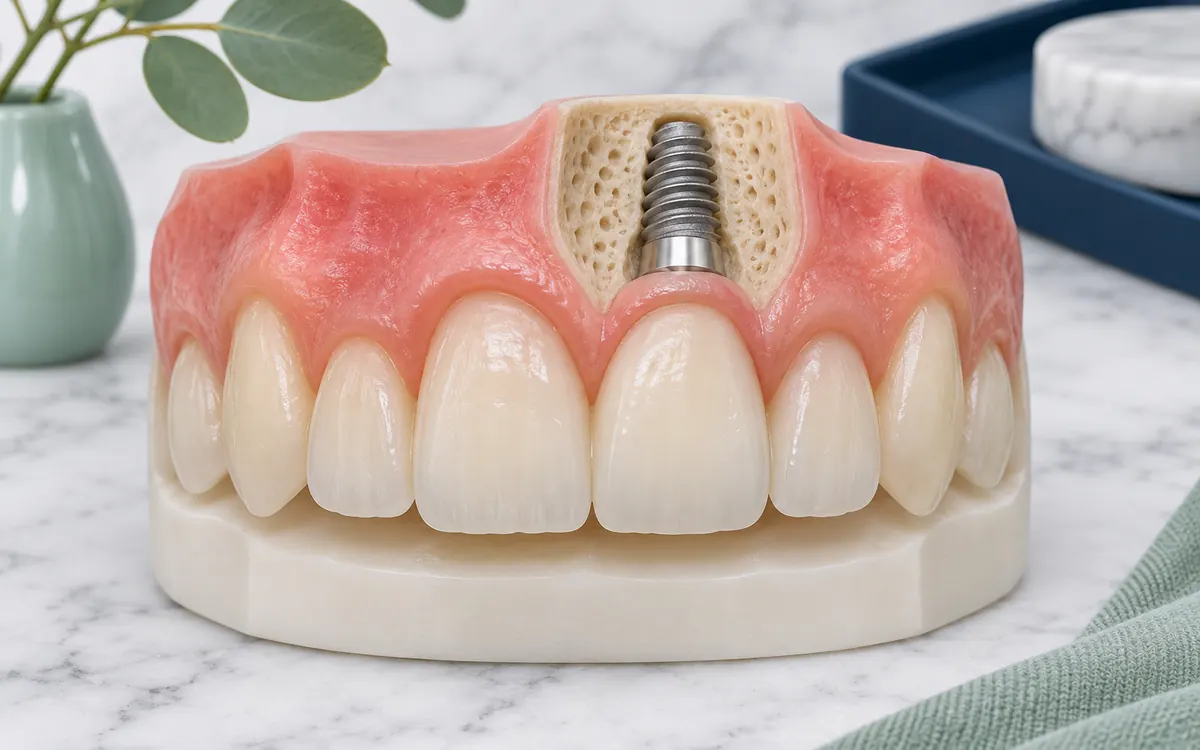
ฟันทั้งขากรรไกร
รากฟันเทียมทั้งปาก All-on-4
สำหรับผู้ที่เหลือฟันน้อยมาก หรือไม่เหลือฟันในขากรรไกรนั้น
ดูบริการ


FAQ
คำถามที่พบบ่อย
ทำรากฟันเทียมเจ็บไหม
ระหว่างฝังรากจะใช้ยาชาเฉพาะที่ จึงมักรู้สึกเพียงแรงกด หลังยาชาหมดฤทธิ์อาจมีอาการปวดและบวมระยะหนึ่ง หากปลูกกระดูกร่วมด้วย มักบวมมากกว่าการฝังรากเพียงอย่างเดียว
ถอนฟันแล้วฝังรากฟันเทียมได้เลยไหม
ทำได้ในบางกรณี เช่น ฟันที่ถอนไม่มีการติดเชื้อรุนแรง และกระดูกรอบเบ้าฟันยังหนาพอยึดราก หากไม่เข้าเงื่อนไข จะถอนฟันก่อนแล้วรอให้แผลและกระดูกหาย ในบางรายอาจปลูกกระดูกไว้ในเบ้าฟันระหว่างรอ
ต้องปลูกกระดูกในกรณีใด
มักพบเมื่อถอนฟันไปนานจนสันกระดูกยุบ หรือการติดเชื้อทำลายกระดูกรอบรากเดิม หากกระดูกขาดไม่มาก อาจปลูกกระดูกพร้อมกับฝังราก หากขาดมาก จะปลูกกระดูกก่อน แล้วจึงฝังรากเมื่อกระดูกพร้อม
ต้องตรวจ CT Scan หรือ CBCT ก่อนทำไหม
ภาพสามมิติแสดงความหนาของกระดูก ตำแหน่งเส้นประสาท และโพรงไซนัส ซึ่งภาพสองมิติเห็นได้ไม่ครบ จึงมักใช้กำหนดตำแหน่งและความยาวของราก ส่วนจะต้องถ่ายหรือไม่ ขึ้นกับตำแหน่งฟันและภาพที่มีอยู่เดิม
ผู้ป่วยเบาหวานทำรากฟันเทียมได้ไหม
ทำได้ในหลายราย เมื่อควบคุมระดับน้ำตาลได้ดี เนื่องจากระดับน้ำตาลสูงทำให้แผลหายช้าและติดเชื้อได้ง่าย ทันตแพทย์อาจขอผลน้ำตาลสะสม หรือปรึกษาแพทย์ประจำตัวก่อนนัดผ่าตัด
คนสูบบุหรี่ทำรากฟันเทียมได้ไหม
ทำได้ แต่บุหรี่ลดปริมาณเลือดที่ไปเลี้ยงเหงือก ทำให้แผลหายช้าและเพิ่มโอกาสที่รากเทียมไม่ยึดกับกระดูก ทันตแพทย์จึงมักแนะนำให้งดหรือลดการสูบบุหรี่ทั้งก่อนและหลังผ่าตัด
รากฟันเทียมมีความเสี่ยงอะไรบ้าง
ช่วงแรกหลังผ่าตัด อาจติดเชื้อหรือรากเทียมไม่ยึดกับกระดูก ในระยะยาว ความเสี่ยงหลักคือเหงือกรอบรากเทียมอักเสบจนกระดูกรอบรากละลาย บางตำแหน่งยังต้องระวังเส้นประสาทและโพรงไซนัส ซึ่งเป็นเหตุผลที่ต้องวางแผนจากภาพรังสี
รากฟันเทียมอยู่ได้นานแค่ไหน
ไม่สามารถรับรองจำนวนปีได้ล่วงหน้า รากเทียมที่ยึดกับกระดูกแล้วออกแบบมาเพื่อใช้งานระยะยาว สาเหตุที่พบบ่อยซึ่งทำให้อายุการใช้งานสั้นลงคือเหงือกรอบรากอักเสบจากการทำความสะอาดไม่ทั่วถึง ส่วนครอบฟันอาจสึกหรือบิ่นตามการใช้งาน ซึ่งสามารถเปลี่ยนใหม่ได้โดยไม่ต้องเปลี่ยนราก
Our team
ทันตแพทย์รากฟันเทียมที่ GDC
ผศ.ทพ.ภควัตร ชาตริยานุโยค เป็นทันตแพทย์คนแรกในเอเชียแปซิฟิกที่ได้รับวุฒิบัตรอเมริกันบอร์ด (American Board) 2 สาขา คือ ทันตกรรมรากเทียม และทันตกรรมประดิษฐ์ (การใส่ฟัน)
ความเชี่ยวชาญทั้งสองสาขาครอบคลุมตั้งแต่การวางแผนฝังรากเทียม ไปจนถึงการออกแบบฟันที่ใส่บนราก ให้กลมกลืนกับฟันข้างเคียงและใช้บดเคี้ยวได้อย่างเหมาะสม
สำเร็จหลักสูตร Fellowship in Implant Dentistry จาก Loma Linda University สหรัฐอเมริกา และเคยดำรงตำแหน่ง Adjunct Assistant Professor ที่ Center for Implant Dentistry ของมหาวิทยาลัยเดียวกัน
ดูทีมทันตแพทย์รากเทียม
Book a consultation
นัดปรึกษาแผนรากฟันเทียม
หากมีภาพถ่ายรังสีหรือผลตรวจจากสถานพยาบาลอื่น สามารถนำมาในวันนัด พร้อมรายการยาที่ใช้อยู่
ข้อมูลในหน้านี้เป็นความรู้ทั่วไป ไม่ใช่การวินิจฉัย แผนการรักษาและค่าใช้จ่ายจะกำหนดหลังการตรวจโดยทันตแพทย์
-
 All cases
-
 Dental implantologist
-
Cosmetic dentist
-
Clear aligner dentist
-
Prosthodontist
-
Orthodontist
-
Pedodontist (Kids)
-
Operative Dentist
-
Endodontist
-
Periodontist
-
Oral surgeon
-
 TMJ Dentist
-
Oral Medicine
-
Plastic Surgeon
-
Craniofacial orthodontist


What affects All-on-4 dental implant cost in Thailand, and what does treatment include?

View Detail
Clear Aligners Reviews — Real-World Pros, Cons & Results
Clear Aligners Reviews — Real-World Pros, Cons & Results
View Detail
Braces Reviews — What Patients Report at Global Dental Complex

Braces Reviews — What Patients Report at Global Dental Complex
View Detail
Braces at Global Dental Complex — Specialist-Led, Digitally Planned Orthodontic Care

Braces at Global Dental Complex — Specialist-Led, Digitally Planned Orthodontic Care
View Detail
Can Braces Fix Protrusion (Overjet)? Complete Guide from Diagnosis to Retention

Can Braces Fix Protrusion (Overjet)? Complete Guide from Diagnosis to Retention
View Detail
Clear Aligner Price Guide — Value, Inclusions, and Smart Questions

Clear Aligner Price Guide — Value, Inclusions, and Smart Questions
View Detail
